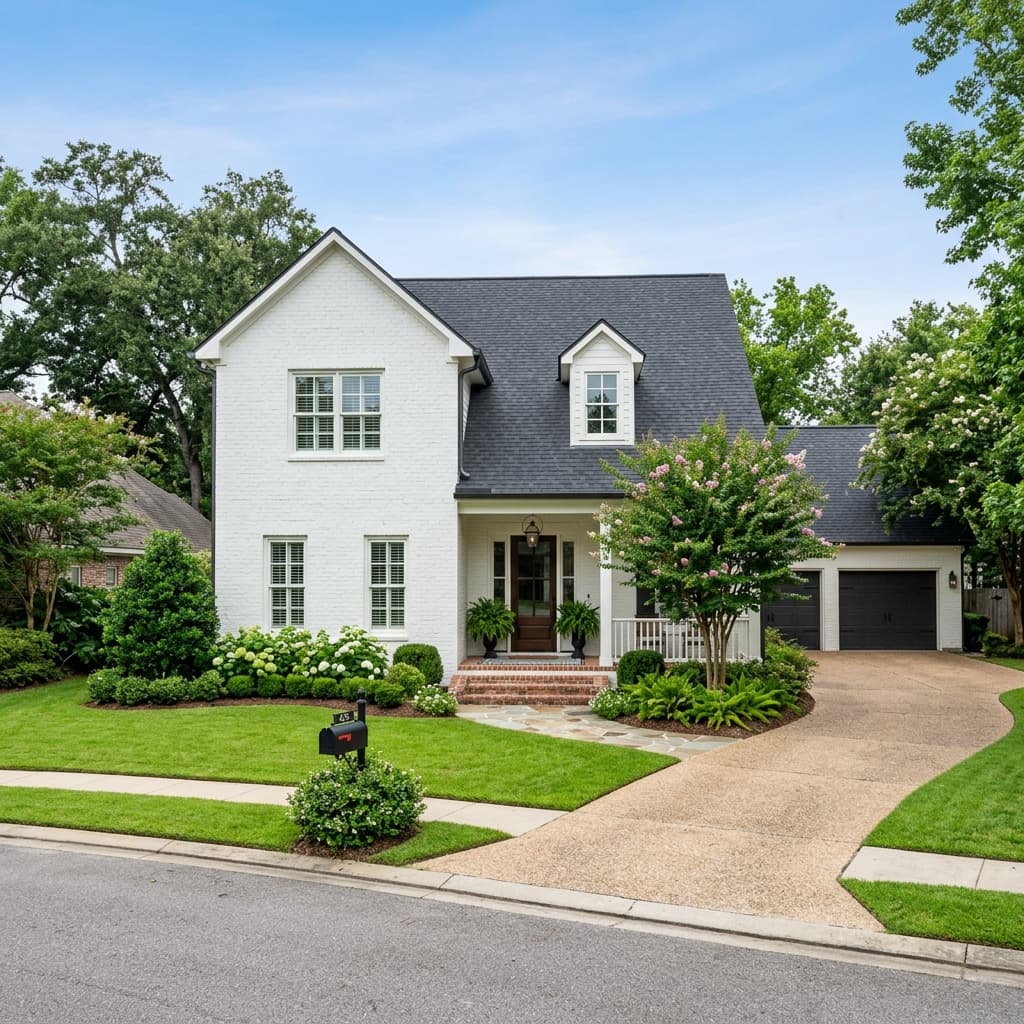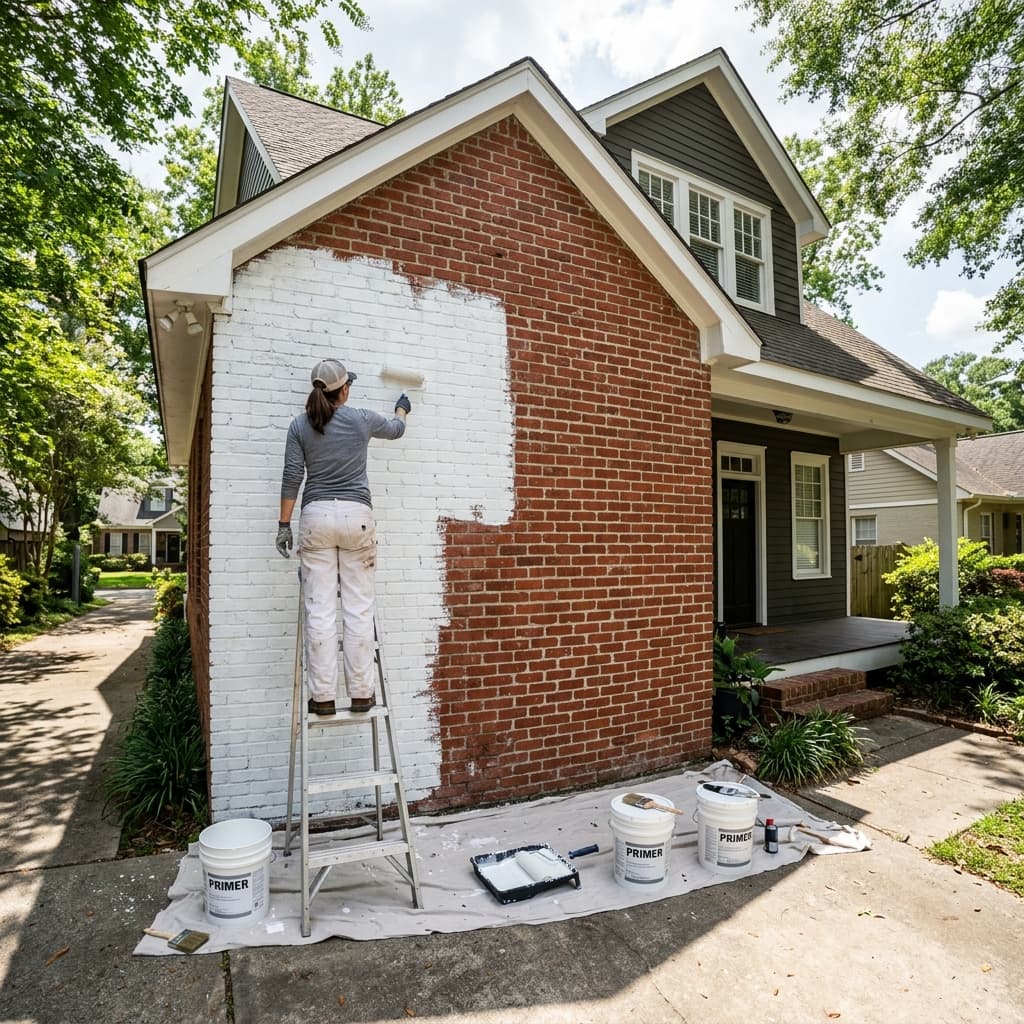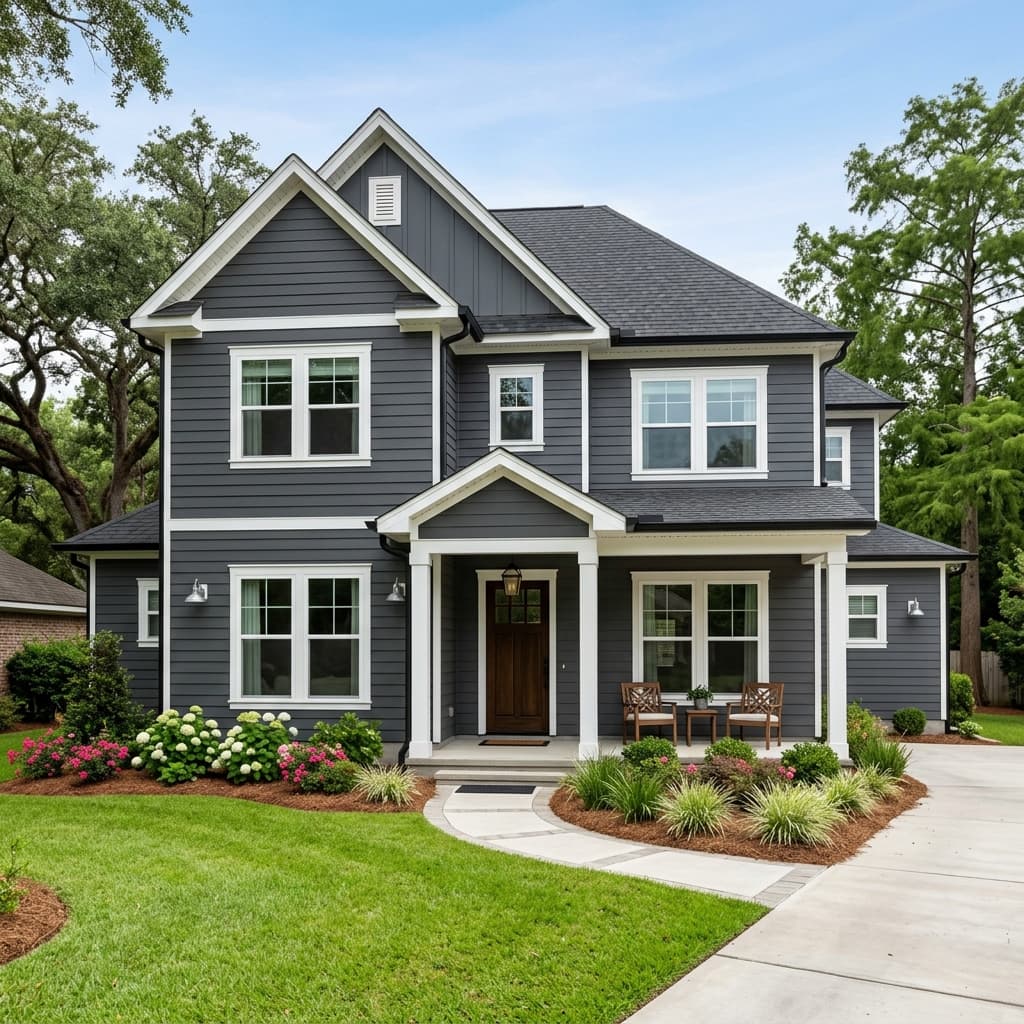

Picking a wall color for the room where you work is harder than it sounds. The color has to feel calm at 9 a.m., look good on a video call at 3 p.m., and still suit the room when the sun moves. The best office paint colors depend on three things: the work you do, the light in the room, and the size of the space. This guide covers the color families that hold up, when to add something bolder, and what is popular right now, with real Sherwin-Williams and Benjamin Moore colors you can sample before you commit.
Key Takeaways
Match the color to your work, your light, and your room size before you fall for a swatch.
Soft blue-gray, warm white, muted green, and warm gray are the safest walls for most offices.
Keep vibrant colors to one accent wall or a shared zone, not all four walls.
Test samples at different times of day, and choose the sheen as carefully as the color.
Why paint color matters in an office
The room you work in shapes how you feel while you work. The National Institute for Occupational Safety and Health runs a Healthy Work Design and Well-Being Program built on that idea: how work and work environments are designed affects worker safety, health, and well-being. Wall color is one small piece of that picture.
Research on color and performance is mixed. A 2026 virtual reality study of wall colors in workspaces with 60 participants found red walls brought the most annoyance and anxiety, blue and yellow lifted mood, and green scored lowest on a proofreading task. The authors also noted that brightness and hue were tangled together in the test, so treat the results as a hint, not a rule.
Paint will not fix a bad workday. It can make the room easier to sit in, and it is worth getting right. Strong color in big doses is where trouble starts, which is why the vibrant section below keeps it to accents.
What color to paint an office: four questions to ask first
Start with the room, not the swatch. Four questions narrow the field quickly.
### What work happens in the room?
Detail work such as accounting, editing, or coding suits calmer colors like soft blue-gray, warm gray, and muted green. Client meetings call for a warm, welcoming neutral. Brainstorming and design work can carry something deeper or bolder.
### How much natural light does it get?
A dim room needs a lighter, warmer color to brighten it. A sun-drenched room can take softer, cooler tones that calm the glare. Window direction changes how a color reads too, and afternoon sun in Greater Baton Rouge can warm up a west-facing office by late day.
### How big is the room?
Room size sets how dark you can go. Small rooms need light colors (covered below), and large, bright rooms can carry depth.
### What is already in the room?
Floors, desks, and shelving bring their own undertones. A cool gray wall can turn muddy next to a red-toned wood floor, so hold a large sample beside your flooring and furniture before you decide.
Then test. Put two or three large samples on different walls and look at them in morning, afternoon, and evening light, with your lamps on and off. Small cards mislead because light changes how a color reads. You can also preview options on a photo of your room with a paint color visualizer.
Skip choosing on trend alone. A trend fades, and the room has to work in 5 years.
Best paint colors for an office: four reliable families
These four families cover most offices. Each one pairs with the sample list at the end of this section.
### Soft blue and blue-gray Blue is the classic focus color. In a study of 443 students living in university residence halls, blue was the most preferred interior color, and a calm mood was linked to preferring it. Keep the shade soft and gray-leaning so it reads professional instead of cold.
### Warm white Stark white can feel sterile under office lighting. A warm white with a cream or beige lean reflects light and keeps the room open, which helps in offices with limited windows. It also sets off wood furniture and dark accents.
### Muted green Soft greens feel restful in a room where you spend most of the day. The lab study above tested a bright, saturated green, and the shades here sit much quieter. Look for gray-leaning sage and olive tones that stay easy to live with.
### Warm gray and greige Gray still works, but the useful grays now carry a warm undertone. They give artwork, screens, and wood furniture a quiet backdrop without feeling industrial. Aim for a balanced mid-tone, not a gray so dark or so cold that it deadens the room.
Here is a shortlist to sample from each family:
| Family | Colors to sample | Good for | | :---- | :---- | :---- | | Soft blue and blue-gray | Palladian Blue HC-144 (Benjamin Moore), Rock Candy SW 6231 (Sherwin-Williams) | Focused desk work, calm rooms | | Warm white | White Dove OC-17 (Benjamin Moore), Alabaster SW 7008 (Sherwin-Williams) | Rooms with limited light | | Muted green | Saybrook Sage HC-114 (Benjamin Moore), Evergreen Fog SW 9130 (Sherwin-Williams) | Long screen days | | Warm gray and greige | Revere Pewter HC-172 (Benjamin Moore), Agreeable Gray SW 7029 (Sherwin-Williams) | Client-facing and mixed-use rooms |
Home office paint colors
A home office rarely gets its own floor plan. It sits in a spare bedroom, a corner of the dining room, or the end of a hallway, and its walls show from the rooms around it. That changes the color job in three ways.
First, the color should get along with the rooms it borders. Pick from the same undertone family as your living areas so the house does not feel chopped up. Second, a desk in a shared room can use one painted wall behind it instead of a full repaint. Third, plan for built-in shelving and desks, since painting them the wall color or a deep contrast finishes the room.
For a home office that leans calm, sample Oceanside SW 6496 (Sherwin-Williams), a blend of green and blue, and Country Tweed SW 9519 (Sherwin-Williams), a soft green. If you are refreshing more than one room, a full interior painting project keeps the color story consistent from room to room.
Corporate office paint colors and matching color to your industry
A workplace serves clients, staff, and a brand, so corporate office paint colors work best when they fit how the space is used.
| Workplace | Colors that fit | Why | | :---- | :---- | :---- | | Law, accounting, consulting | Blue-gray, warm gray, deep navy accents | Signals steadiness and stays out of the way of client conversations | | Creative studio or agency | Deep green, charcoal, brown, or a bold accent wall | Gives the room personality and helps the team settle in | | Healthcare-related office | Soft green, pale blue, warm neutrals | Puts waiting visitors at ease | | Technology and start-up | Cool gray or white with one brand accent | Reads modern and lets screens and brand color lead |
For a dependable professional gray, try Mindful Gray SW 7016 (Sherwin-Williams) or Coventry Gray HC-169 (Benjamin Moore). Brand colors deserve a role, not the whole room. Use them on a reception wall or a feature wall and keep the working areas calmer. If you manage a larger workplace, commercial painting adds planning for schedules and shared areas.
Small office paint colors
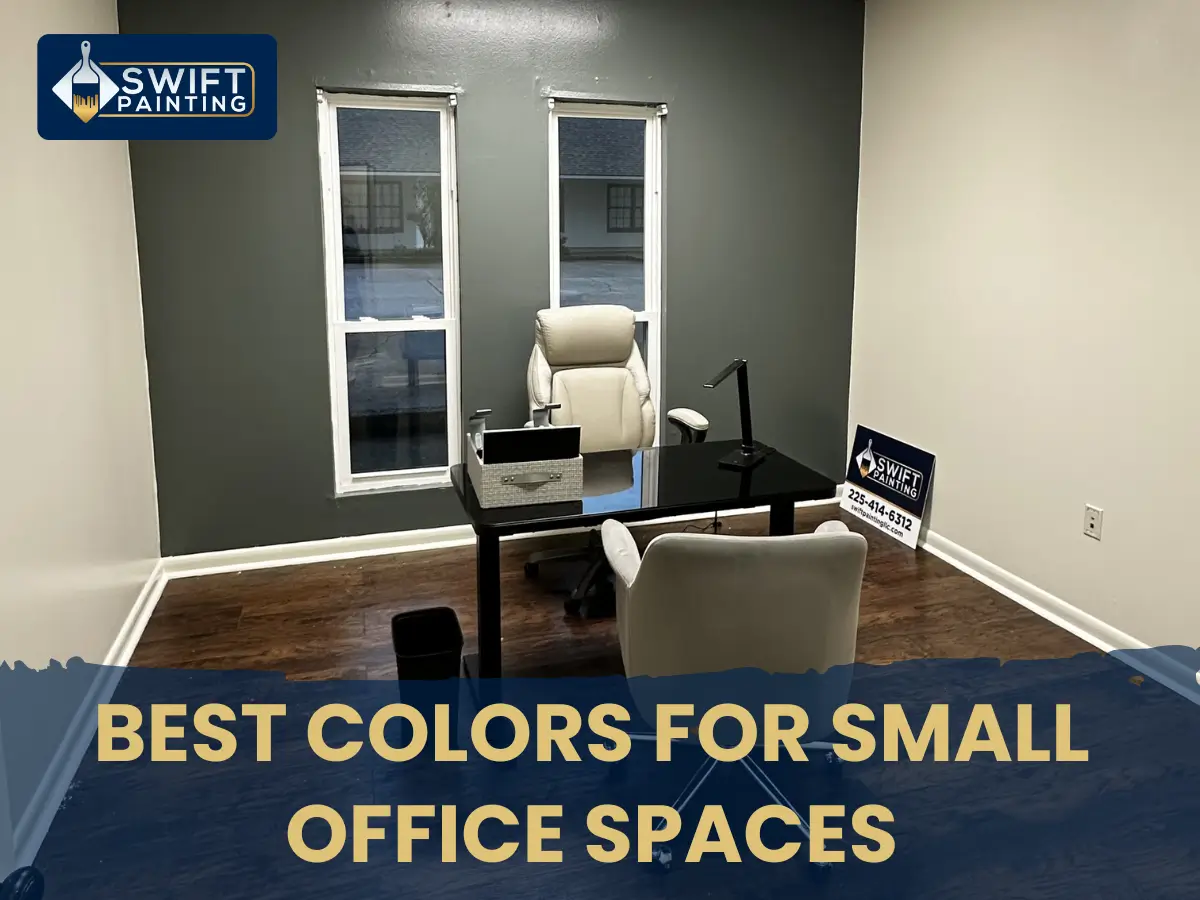
Small rooms punish dark, heavy colors and harsh glare. Light tones with some warmth work best because they bounce daylight around and keep the walls from closing in. Pale gray, soft greige, and warm white are the dependable picks.
Cloud White OC-130 (Benjamin Moore) and Edgecomb Gray HC-173 (Benjamin Moore), a soft greige, both suit a compact room. Paint the ceiling a light color too, so the top of the room stays open. If you love a rich color, use it on the one wall behind the desk, not on all four walls.
Start-ups and small businesses setting up a first space often do well with one neutral carried through the whole office. It keeps future touch-ups simple, since you never have to match several shades.
Modern office paint colors
Modern offices have moved past plain white walls, but they have not moved to loud color either. The look now comes from combinations more than from any single shade. Three approaches carry most modern rooms:
1. A warm neutral base with one deep accent. Three calm walls and one rich wall behind the desk or in the meeting area.
2. Color-drenching. Walls, trim, and built-ins all in one rich shade, which makes a tailored, wrapped-in-color room. It works best where daylight is good.
3. Two-tone walls. A deeper color below and a lighter one above, split by a wainscot or a clean painted line.
Because a one-color room surrounds you, sample it at full scale before you commit.
Dark and moody colors for an office
Dark walls have a reputation for shrinking rooms. In the right office they do the opposite. They make a room feel deliberate, and they suit executive offices, studios, and creative spaces.
Dark works best in larger rooms with plenty of daylight, and it needs layered lighting: overhead, a desk lamp, and a wall or floor light so the room stays comfortable on cloudy days and at night. Good starting points are Tarpley Brown CW-170 (Benjamin Moore), a rich earthy brown, Naval SW 6244 (Sherwin-Williams), a deep navy, Grizzle Gray SW 7068 (Sherwin-Williams), a dark charcoal, and Kendall Charcoal HC-166 (Benjamin Moore). Keep the ceiling lighter or tone-on-tone, and add wood or metal finishes so the room keeps some warmth.
Colors to paint an office that are vibrant and inspiring
Not every office should be quiet. A little bold color lifts a room that feels flat, and it works best when you give it a defined job. Given the lab results above, where red brought the most annoyance and anxiety, use strong colors in controlled doses.
Vibrant color earns its place in three spots:
One accent wall beside or behind the desk, so it is not in your direct line of sight all day.
Collaboration areas, break rooms, and entryways, where people move through instead of settling in.
A door, a set of shelves, or an alcove, when you want a spark without a big commitment.
Peruvian Chili CSP-1100 (Benjamin Moore) is a spicy warm hue that Benjamin Moore suggests for an accent wall. Beacon Hill Damask HC-2 (Benjamin Moore) is a soft yellow with a hint of green, good for a room with little daylight. Pale Moss SW 9027 (Sherwin-Williams) is a muted yellow-green with a little life. Sunlit Coral 2170-60 and Hazy Lilac 2116-40 (both Benjamin Moore) suit a creative corner. Pair any of them with a calm neutral on the remaining walls so the accent reads as intentional.
What office paint colors are popular right now?
The big paint brands announce a Color of the Year each fall, and the picks show where taste is heading. The 2026 and 2027 choices from Sherwin-Williams and Benjamin Moore lean warm and grounded, not stark.
| Color | Brand and code | Year | Look | Office use | | :---- | :---- | :---- | :---- | :---- | | Silhouette | Benjamin Moore AF-655 | 2026 | Rich espresso brown with charcoal notes | Study, executive office, or a color-drenched room | | Universal Khaki | Sherwin-Williams SW 6150 | 2026 | Warm, earthy mid-tone neutral | A safe wall for almost any office | | Celery | Sherwin-Williams SW 6421 | 2027 | Airy herbal green with a yellow undertone | A light wall or accent in a bright room |
Colors of the Year listed as announced through September 2026. Popular is a starting point, not a verdict. A trending color still has to look right in your light, so sample it first. For more on where interior color is heading, see these interior paint trends.
Sheen: the finish matters as much as the color
Sheen changes how a color looks and how well it wears. Matte and eggshell suit office walls. Matte cuts glare and looks soft, and eggshell reflects a bit more light while staying easy to clean.
Satin, semi-gloss, and gloss belong on trim, doors, and built-ins, where you want a crisp edge and a surface that takes wiping. For a closer look at trim and door finishes, see how high-gloss enamel finishes behave. In a room with strong window light, skip anything shinier than eggshell on the walls, or reflections will show up on your screen.
Office building exterior paint colors
The outside of an office building sets the first impression, and the same rules apply with a few extras. Start with what cannot change: brick, stone, roofing, and metal. Choose a body color that works with those fixed materials, then add trim and an entry door that contrast enough to point visitors to the front.
Stick to two or three colors so the building reads as one composed property. If a landlord or an association owns the building, check the rules on exterior colors before you sample anything. Then test large samples on a sunny wall and a shaded wall. For the painting itself, exterior painting and commercial painting are the services that cover a building like this.
Pick the color that fits how you actually work
Good office color is less about the perfect shade and more about a decision you can live with. Choose a calm base, add a bold moment only where it earns its place, and match the finish to the room. Sample two or three colors, live with them for a few days, and let your own light make the call. Then paint the room and get back to work.
How Swift Painting helps you get the color and the finish right
Swift Painting paints homes and offices across Greater Baton Rouge with Sherwin-Williams and Benjamin Moore, so every color in this guide is one we can put on your walls. Color consultation is the first step of every project, and the on-site estimate includes a color and product discussion. Careful prep, clean lines, and an even finish do the rest, because a good color still looks wrong over rushed work.
Here is what stands behind the work:
1. Licensed and insured: a Louisiana licensed home improvement contracting company, with Workmen's Comp and General Liability coverage through LWCC.
2. Chooz "Top Pro" award for painting contractors in Baton Rouge, with a Chooz Score of 88.1%.
3. Ranked in the top 99% of Louisiana contractors by BuildZoom.
4. A same-day, on-site estimate, delivered before the crew leaves.
Ready to pick a color? Get a free estimate and we will talk it through with you on site.
Frequently Asked Questions
What color should I paint my office?
Match it to the work. For focused desk work, go with a soft blue-gray or muted green. For a client-facing room, a warm white or warm gray feels welcoming. For a creative space, a deep brown, navy, or charcoal, or a bold accent wall, adds energy. Whatever you choose, sample it in your own light first.
Which office colors are best for video meetings?
Soft, mid-value neutrals such as warm gray, muted blue, and warm white look clean and professional on camera. Very bright or saturated walls behind you can pull attention from your face, and glossy finishes catch the light. Open a video call and check what the camera actually shows before you commit.
How often should an office be repainted?
Most offices need fresh paint every 3 to 7 years, depending on wear. Lobbies, meeting rooms, and hallways show scuffs first and may need it sooner, while private offices and low-traffic rooms can go longer. A home office usually lasts longer still. Repaint when walls look scuffed, stained, or faded, not just when the calendar says so.
What is the best paint color for an office with no windows?
Windowless rooms need warmth and reflectivity. Choose a light, warm color such as soft cream, warm white, or pale greige so the walls bounce back what light there is. Pair it with layered lighting: overhead, task, and a lamp. A soft warm yellow can stand in for daylight, but sample it under your actual bulbs.
Ready to Transform Your Home?
Whether you need exterior repainting, interior transformations, or custom cabinet spray refinishing, Swift Painting LLC delivers flawless results engineered for Louisiana homes.
Contact our expert team today for your free written proposal.