Best Paint for Brick Exteriors: What to Use and Why
If you're standing in the paint aisle wondering what the best paint for brick actually is, you're asking the wrong first question. The paint matters, but what happens to your brick after it's on the wall depends far more on prep, primer, and whether the coating lets your brick breathe. At Swift Painting, we've seen plenty of brick exteriors fail early, and it's almost never the paint can's fault.
This guide walks through what actually holds up on brick, when stain makes more sense than paint, and why Louisiana's humidity raises the stakes on a decision that's tough to undo once it's made.
Key Takeaways
The best paint for brick is almost always a masonry-specific paint or a purpose-built brick stain, not standard exterior paint.
Brick needs to breathe. A coating that seals it completely traps moisture and causes problems from the inside out.
Stain preserves brick's natural texture. Paint gives full, uniform color coverage. Neither is automatically better.
Bare or previously unpainted brick almost always needs a masonry primer first.
Baton Rouge's humidity makes breathability a bigger factor here than in drier climates.
What Makes Brick Different From Other Exterior Surfaces
Brick isn't just a hard surface waiting for a coat of paint. It's porous by design, and it absorbs and releases moisture constantly as part of how it's meant to perform. That's not a flaw. It's how brick has held up on homes for over a century with almost no maintenance.
The problem starts when a non-breathable coating goes over that brick. The National Park Service's guidance on common brick masonry problems notes that waterproofing brick with paint or other non-permeable coatings traps moisture behind the surface and accelerates decay (source: NPS, Common Problems with Brick Masonry). That moisture has to go somewhere, and on brick, it usually shows up as cracking, spalling, or paint that fails from underneath within a few years.
Best Paint for Brick: What Actually Holds Up
The best paint for brick falls into two broad categories: masonry-specific paint and high-quality acrylic latex formulated for exterior use. Standard interior-grade or all-purpose paint isn't built for brick's porosity or its alkalinity, and it tends to fail faster no matter how many coats go on.
Masonry paint lines like Sherwin-Williams' Loxon system or Benjamin Moore's MoorGard are formulated specifically for brick, stucco, and concrete. They're built to handle the pH swings that come with porous masonry and to stay flexible instead of cracking. Premium exterior acrylic lines, Sherwin-Williams Emerald and Benjamin Moore Aura among them, also perform well on brick when it's properly primed and prepped first.
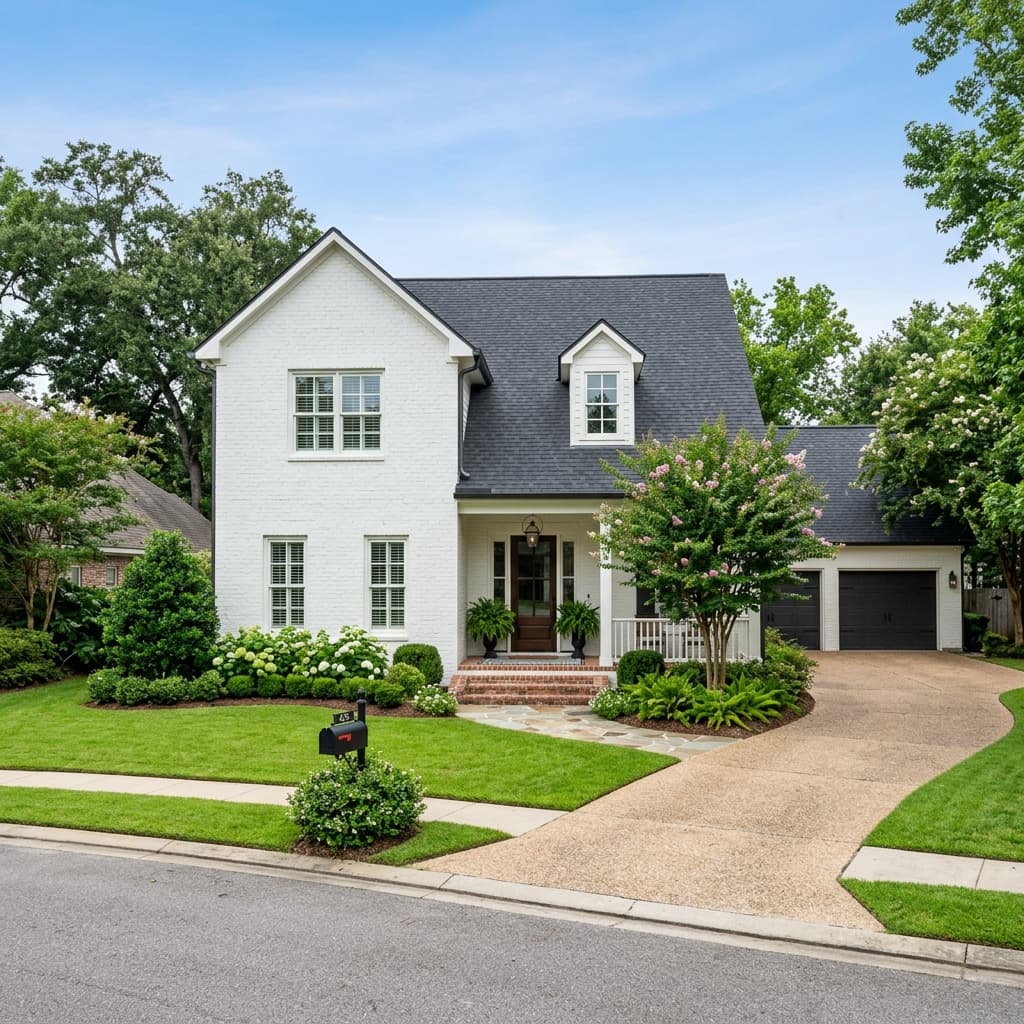
Painted Brick vs. Brick Stain: Which One Fits Your Home?
Paint isn't the only option. Sherwin-Williams also makes a dedicated brick and masonry stain line, a semi-transparent product that soaks into the brick rather than sitting on top of it. It changes the color while keeping the texture and some of the natural variation in the brick itself.
| Factor | Painted Brick | Brick Stain |
|---|---|---|
| Coverage | Full, opaque, uniform color | Semi-transparent, texture stays visible |
| Breathability | Depends on the product | Generally more breathable by nature |
| Best for | A complete color change | Enhancing brick's natural look |
| Reversibility | Very difficult once applied | Easier to touch up or shift over time |
If you like your brick's texture and just want to shift the tone, stain is worth a real look before you default to paint.
Best Primer for Brick Exterior
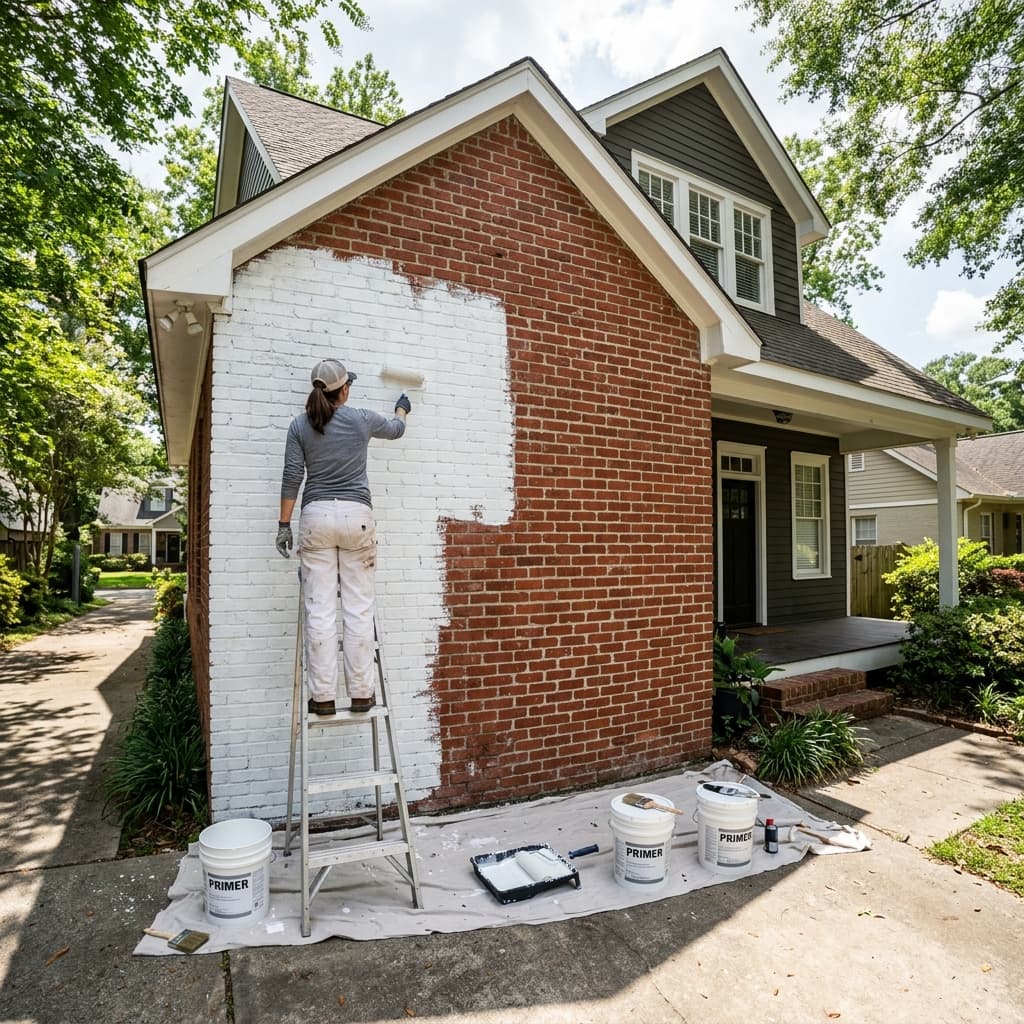
Bare or never-painted brick almost always needs a masonry-specific primer before anything else goes on. Primer seals the brick's porosity, evens out how it absorbs the topcoat, and helps manage the alkalinity that raw masonry naturally carries. Skip it, and even a great paint can adhere unevenly or fail early.
If your brick has been painted before and the existing coat is in good shape, you may only need to spot-prime bare or repaired areas rather than apply a full coat. Either way, this is a step worth confirming during an estimate, not guessing at from a ladder.
Before You Paint: What a Real Inspection Catches
A good brick paint job starts before anyone opens a can. A real inspection looks for a handful of specific things:
- Efflorescence, that white, chalky residue that signals moisture moving through the brick
- Damp spots or staining that point to an unresolved water issue
- Cracks, hairline ones are usually cosmetic, wider ones may need a mason's evaluation
- Failed or crumbling mortar, which needs repointing before any paint goes on
- Prior coatings, since what's already there affects what can safely go over it
Skipping this step is the single most common reason painted brick fails early.
Why Baton Rouge Humidity Changes the Equation
Louisiana doesn't just get hot, it stays humid for most of the year, and that combination puts more pressure on a brick coating than a drier climate ever would. Moisture has more opportunity to move through brick here, which means a coating that can't release vapor properly is more likely to trap it.
Heavy seasonal rain and long stretches of high humidity also mean efflorescence and mildew show up more often on Baton Rouge and Livingston Parish brick than they might elsewhere. That's exactly why breathability isn't a nice-to-have here, it's the deciding factor in whether a brick paint job lasts ten years or three.
A Note on Historic Brick
Older brick, especially anything built before the mid-1900s, was often made and fired differently than modern brick. It tends to be softer and more porous, which means it reacts differently to paint and primer than newer construction. If you own a historic home, this decision deserves its own conversation before you commit to a color or a product. We'll cover this in more depth in a future guide dedicated to historic home painting.
What Actually Drives the Cost of Painting Brick
There's no single number that applies to every brick exterior, but a few factors consistently drive the cost up or down:
- Home size and story count
- How much repair work the mortar and brick need before painting
- Whether the brick is bare and needs a full primer coat or just spot-priming
- How much cleaning and prep the surface requires
- Whether you choose a standard paint or a premium masonry system
The only way to get a real number for your home is a proper on-site estimate.
Should You DIY This or Call a Professional?
Painting brick yourself is possible, but it's less forgiving than painting wood or vinyl. Getting the primer right, catching efflorescence before it becomes a bigger problem, and applying a breathable system correctly all take real experience.
Our exterior painting team walks every brick exterior before we quote it, checking for the same things covered above, so nothing gets missed once the paint goes on.
Why Homeowners Trust Swift Painting With a Brick Exterior
Painting brick is close to a permanent decision, so it's worth knowing who you're trusting with it. Here's what homeowners in Greater Baton Rouge and Livingston Parish get when they work with us:
- 1Licensed and insured, a Louisiana licensed home improvement contracting company carrying Workmen's Comp and General Liability through LWCC
- 24.9 stars and 307 reviews on Google
- 3Chooz "Top Pro" award for painting contractors in Baton Rouge, with a Chooz Score of 88.1%
- 4Ranked in the top 99% of Louisiana contractors by BuildZoom
- 5A same-day, on-site estimate before our crew ever leaves your property
A Decision Worth Getting Right the First Time
Painting brick is one of the more permanent choices you'll make on your home's exterior, so it's worth getting the product, the prep, and the primer right the first time. Whether that means a full masonry paint system or a stain that keeps more of your brick's character, the process matters more than the can.
Ready to talk through the right approach for your home? Get a free estimate, and we'll walk your brick exterior with you before we recommend anything.
Frequently Asked Questions
What is the best paint for brick exteriors?
A masonry-specific paint or a high-quality exterior acrylic formulated for brick, properly primed and prepped first, holds up best over time.
Do you need to prime brick before painting it?
Bare or never-painted brick almost always needs a masonry primer. Previously painted brick in good condition may only need spot-priming on bare or repaired areas.
Is brick stain better than brick paint?
Neither is automatically better. Stain preserves brick's natural texture and is generally more breathable, while paint gives full, uniform color coverage.
Can painted brick be returned to its natural look?
Technically yes, but it requires professional stripping and isn't always fully successful at restoring the brick's original appearance. Treat painting brick as a permanent decision.
Does Louisiana's humidity affect how brick paint performs?
Yes. High humidity and heavy seasonal rain put more pressure on breathability, which is why product choice matters more here than in drier climates.
How long does painted brick typically last?
With proper prep and a quality, breathable coating system, painted brick typically holds up for a decade or more before it needs a full repaint.