Best Primer for Brick Exterior: When Primer Helps and When It Does Not
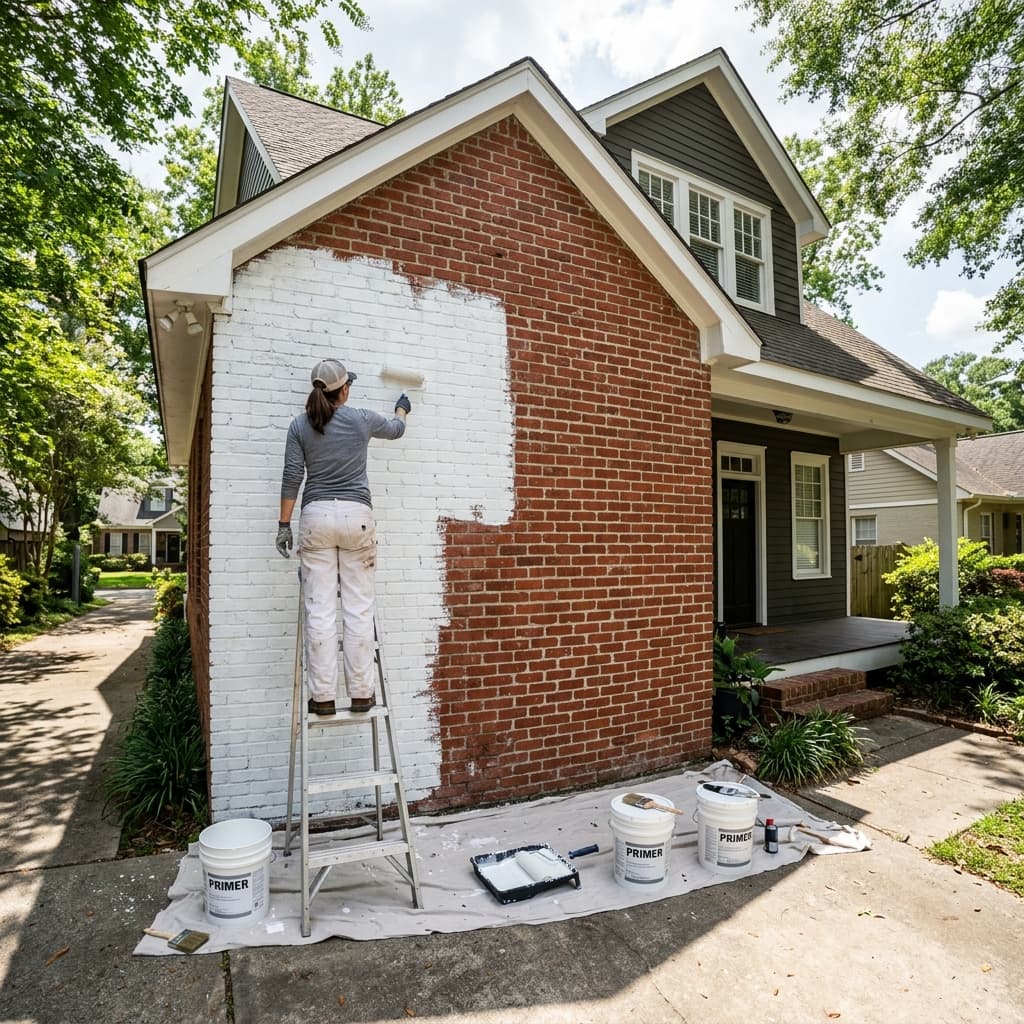
Search for the best primer for brick exterior and you'll get a list of ten products in under a minute. What you won't get is the more useful answer: whether your brick needs primer at all, and if it does, why a regular can from the paint aisle won't cut it. At Swift Painting, primer is one of the first things we assess on a brick exterior, not because more product is always better, but because the wrong one fails fast and the right one depends entirely on your brick's condition.
This guide covers when primer actually helps, when it won't fix what's really going on, and what to look for once you know you need it.
Key Takeaways
Bare or never-painted brick almost always needs a masonry-specific primer.
Standard latex or all-purpose primer can fail on brick because of its natural alkalinity.
Some paints, including certain Behr and Benjamin Moore lines, self-prime and skip the separate step.
Primer won't fix efflorescence or active moisture. Those need to be solved first.
New brick and fresh mortar need real cure time before any primer goes on.
Why Brick Needs a Different Primer Than Wood or Drywall
Brick and mortar are naturally alkaline, especially when they're new. That alkalinity can react with standard latex primer in a process that breaks the primer down from the inside, a bit like the primer turning soft and soapy instead of curing into a solid film. Once that happens, the topcoat above it has nothing stable to hold onto.
Masonry-specific primers are formulated to resist that reaction. That's the real difference between a primer that says "masonry" or "alkali-resistant" on the can and one that doesn't. It's not marketing, it's chemistry, and it's the reason a primer that works beautifully on drywall can fail within weeks on brick.
Best Primer for Brick Exterior: When You Actually Need One
Whether you need primer, and how much, depends on your brick's history.
Bare or never-painted brick almost always needs a full coat of masonry-specific primer. This is the surface primer was built for, porous, alkaline, and untouched by any prior coating.
Previously painted brick in good condition may not need a full primer coat at all. If the existing paint has solid adhesion and no bare or damaged spots, spot-priming those specific areas is often enough before the new topcoat goes on.
Self-priming paints exist too. Certain Behr and Benjamin Moore exterior lines are formulated to handle both jobs in one product on properly prepped brick. That doesn't mean prep goes away, it just means the primer and topcoat come from the same can.
When Primer Won't Fix the Real Problem?
Primer solves adhesion problems. It doesn't solve moisture problems, and confusing the two is where a lot of brick paint jobs go wrong.
Efflorescence, that white, chalky residue on brick, is a sign of moisture moving through the wall and depositing salts on the surface. Priming over it doesn't stop that movement. It just traps the salts and the moisture behind a new layer, and the problem resurfaces, usually as blistering or peeling within the first year.
The same goes for brick that's actively damp or shows staining. Preservation guidance from the National Park Service on masonry coatings makes the point directly: a coating on masonry should let water vapor pass through rather than sealing it in, and coatings shouldn't go on until the underlying moisture issue is identified and resolved (source: NPS, Preservation Brief 1: Assessing Cleaning and Water-Repellent Treatments for Historic Masonry Buildings). Primer is a prep step, not a repair for a wall that's still wet.
Choosing the Right Type of Primer
Once you know you need primer, the type matters as much as the brand. Masonry-specific primer is the standard choice for bare or repaired brick, built to handle alkalinity and porosity together. Stain-blocking primer is worth a look if you're dealing with rust from old ties or lintels, or mineral staining that would otherwise bleed through a standard topcoat. Bonding primer comes into play when you're painting over a glossy or otherwise stubborn existing surface where adhesion is the main concern.
If you're deciding between a full paint system and a semi-transparent option like Sherwin-Williams' brick stain line, the right primer can differ slightly between the two, which is worth confirming before you buy either product.
How Long Should New Brick or Mortar Cure Before Priming?
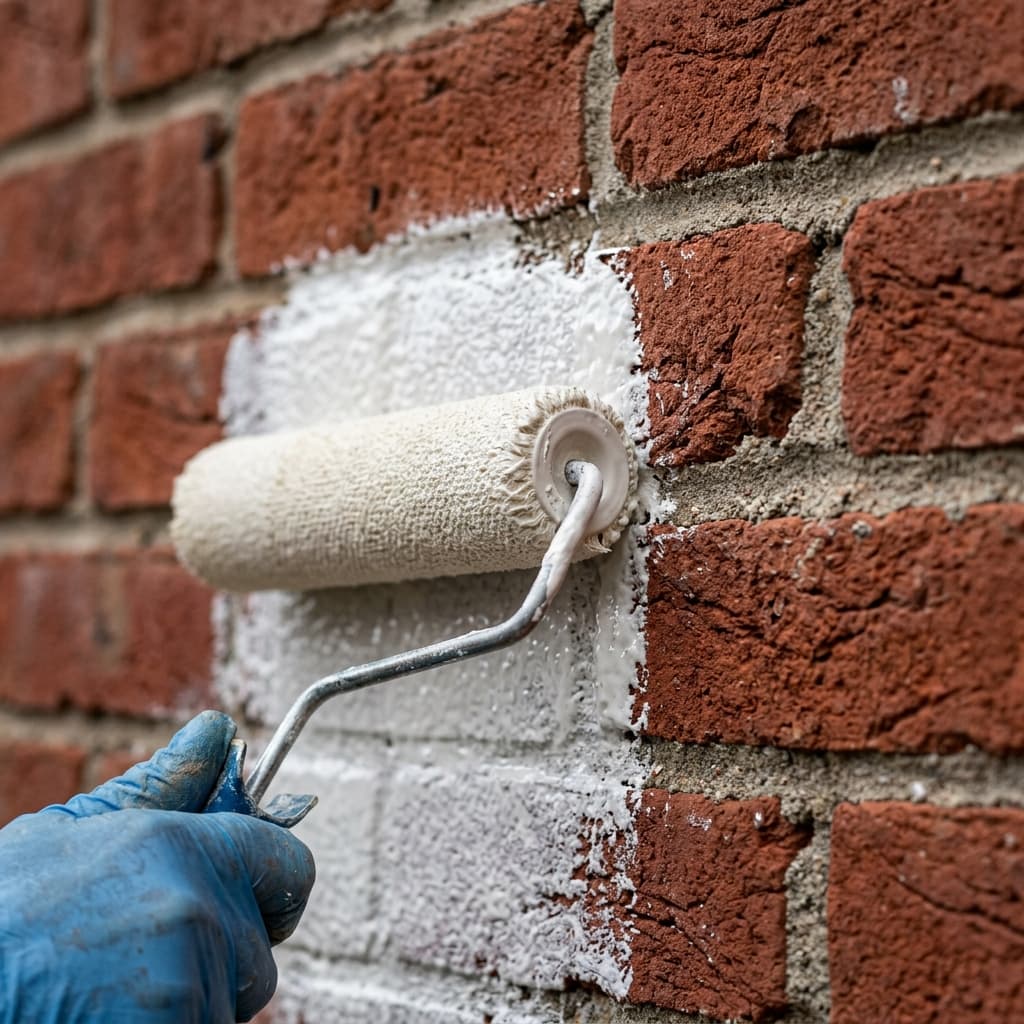
New brick and fresh mortar need real time to cure before primer goes on, typically a minimum of several weeks. Priming too soon traps uncured alkalinity and moisture inside the wall, which sets up the same kind of early failure that skipping primer altogether would cause.
If you've just had mortar repointed on an otherwise older wall, the same rule applies to that new mortar, even if the surrounding brick has been painted for years. Confirm the cure window with whoever did the masonry work before scheduling a paint job on top of it.
Should You DIY This or Call a Professional?
Picking the wrong primer, rushing cure time, or priming over efflorescence that hasn't been addressed are the three most common ways a DIY brick primer job goes wrong. None of them show up immediately. They show up six months to a year later, as peeling, blistering, or a finish that never looked quite right to begin with.
Our exterior painting team inspects brick for exactly these issues before recommending a primer, so the choice is based on what your wall actually needs rather than a general assumption.
Why Homeowners Trust Swift Painting With Brick Prep?
Getting primer right is a small step that prevents a large problem later. Here's what homeowners in Greater Baton Rouge and Livingston Parish get when they work with us:
- 1Licensed and insured, a Louisiana licensed home improvement contracting company carrying Workmen's Comp and General Liability through LWCC
- 24.9 stars and 307 reviews on Google
- 3Chooz "Top Pro" award for painting contractors in Baton Rouge, with a Chooz Score of 88.1%
- 4Ranked in the top 99% of Louisiana contractors by BuildZoom
- 5A same-day, on-site estimate before our crew ever leaves your property
Primer Is a Decision, Not a Default
Primer isn't something to grab off the shelf without a second thought, and it isn't something to skip to save a step either. The right call depends on your brick's condition, its history, and what's actually happening underneath the surface.
For the fuller picture on paint systems, stain options, and what holds up long-term on brick, our guide to best paint for brick exteriors covers the rest of the decision.
Ready to find out what your brick actually needs? Get a Free Estimate and we'll walk you through it before any primer goes on.
Frequently Asked Questions
Do you always need to prime brick before painting it?
Not always. Bare or never-painted brick almost always needs it, but previously painted brick in good condition may only need spot-priming, and some paints self-prime on properly prepped surfaces.
What happens if you skip primer on brick?
The topcoat can adhere unevenly, absorb inconsistently into the brick's porous surface, and fail earlier than it would with a proper primer coat underneath.
Can you use regular exterior primer on brick?
Not reliably. Brick's natural alkalinity can break down standard latex primer, so a masonry-specific, alkali-resistant primer is the safer choice.
How long should new mortar cure before priming?
Several weeks at minimum. Priming too early traps uncured alkalinity and moisture, setting up the same failures that skipping primer would cause.
Will primer fix efflorescence on brick?
No. Efflorescence is a sign of moisture movement, and priming over it traps that moisture instead of resolving it. The underlying issue needs to be addressed first.