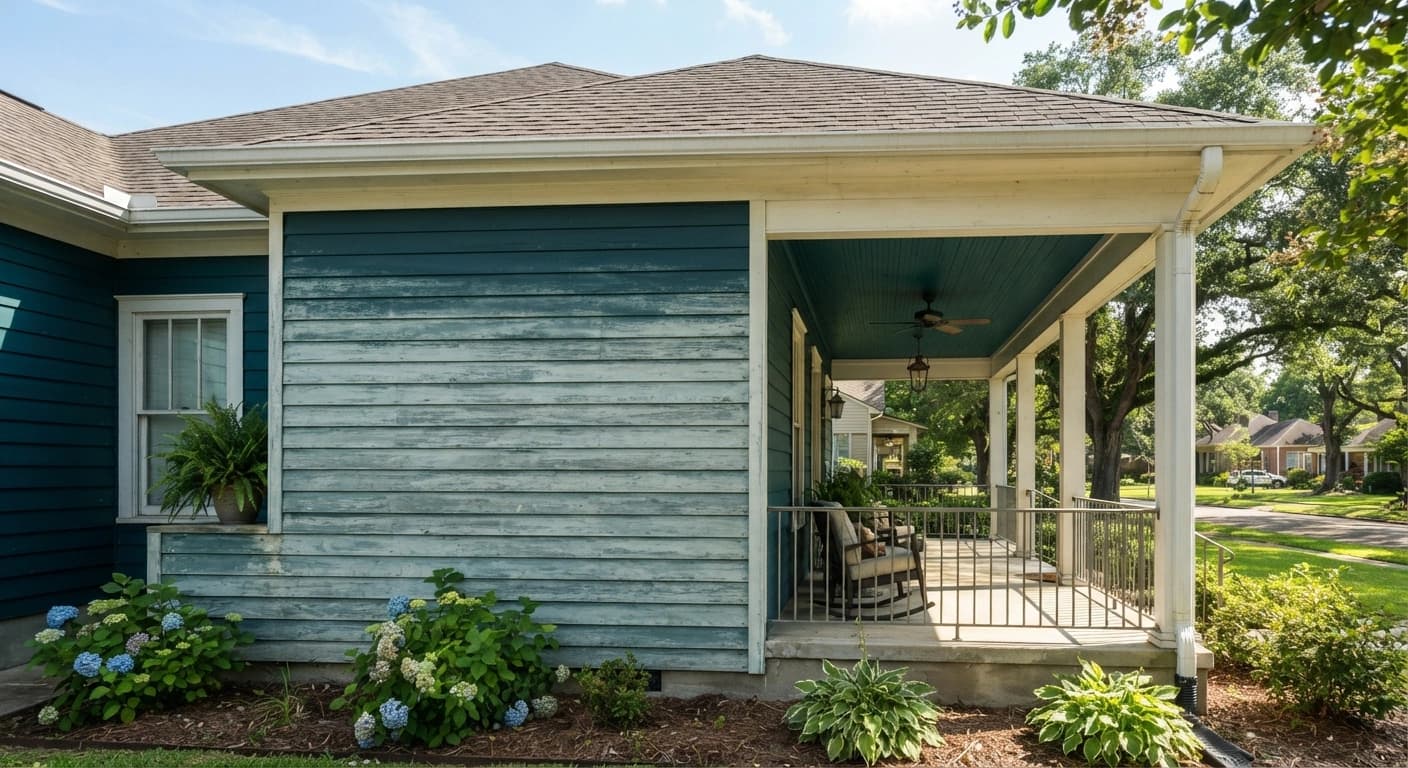
You painted the house a few years ago, and now one wall looks tired next to the porch ceiling. The color seems to have drained out, and you want to know whether the sun, the paint, or the shade you picked is to blame. Faded colors are a common problem on Louisiana homes due to weather, and the cause is usually easy to spot once you know what to look for. This guide covers what breaks color down, which shades go first, and how to slow the process. You will also learn how to tell whether a wash will do or a repaint is the better call.
Key takeaways
Faded colors start with ultraviolet (UV) light, which breaks down the pigments and the binder that hold your paint's color in place.
Understanding why exterior paint fades starts with four causes: UV exposure, moisture, paint quality, and how thick the coat went on.
Sun fading paint hits south and west walls first, so those sides tell you the most about your paint's condition.
Paint color fading follows a pattern: reds, oranges, and yellows go first, deep dark shades come next, and whites, creams, and light grays hold longest.
Fade-resistant paint, primer, a full-thickness coat, and a yearly rinse slow the process. Once paint turns chalky, repainting the whole wall beats spot touch-ups.
What causes faded colors on a house?
Faded colors happen when UV light breaks the chemical bonds in the pigments that give paint its color. UV also wears down the binder, the resin that holds pigment in the paint film. As the binder weakens, pigment loosens, the shade lightens, and the surface turns powdery. Painters call that powder chalking.
Fading is more than a cosmetic problem. A chalky film protects the siding underneath less than a healthy one, so a wall that leaves white dust on your hand needs attention sooner than one that has only lost a shade.
Why does exterior paint fade faster than you expect?
Sun does most of the damage, and moisture and paint quality decide how fast it happens.
Sun fading paint: UV and heat
Sun fading paint is the biggest factor by far. South and west walls take the longest, strongest light, and long Louisiana summers give that light plenty of months to work. MyWild publishes a daily UV Index forecast, so you can see how strong the sun is where you live.
Heat adds to the strain. Dark siding absorbs more of it, and the paint film expands and contracts with every hot afternoon and cool night.
Moisture and temperature swings
Rain, dew, and condensation slowly wear on the paint film, and damp spots invite mildew that stains and dulls color. Temperature swings make the film flex, which can crack it and speed up chalking. Moisture works alongside the sun: it weakens paint that UV has already started to break down.
Low-quality paint and thin coats
Lower-quality paint may fade sooner because it can contain fewer UV-stable pigments. Applying thin coats or adding too much water can also reduce coverage and color durability. Over-tinting the paint can affect its performance, while skipping primer may cause the finish coat to absorb unevenly into bare or weathered siding.
Which paint colors fade the fastest?
Paint color fading follows a clear pattern. Some shades start to look tired much sooner than others.
| Color family | Fade risk | Why | Smarter move |
|---|---|---|---|
| Reds, oranges, yellows | Highest | Their pigments break down quickly under UV | Save them for a door or accent, and choose a premium exterior line |
| Deep blues, forest greens, charcoal | High | Dark surfaces absorb more light and heat | Go a shade lighter on big walls and keep the deep tone for trim |
| Whites, creams, light grays | Lower | Light colors reflect more sunlight | The safest pick for south and west walls |
Pigment type matters too. Inorganic pigments tend to resist UV better than organic ones, so ask about the most fade-resistant colors in any line you are considering. On stucco, the same rules apply, and a roundup of the best exterior paint colors for stucco homes shows palettes worth a look.
How to prevent sun fading paint before the first coat
Sun fading paint is easier to slow than to reverse, and most of the work happens before the first coat goes on.
Choose fade-resistant exterior paint
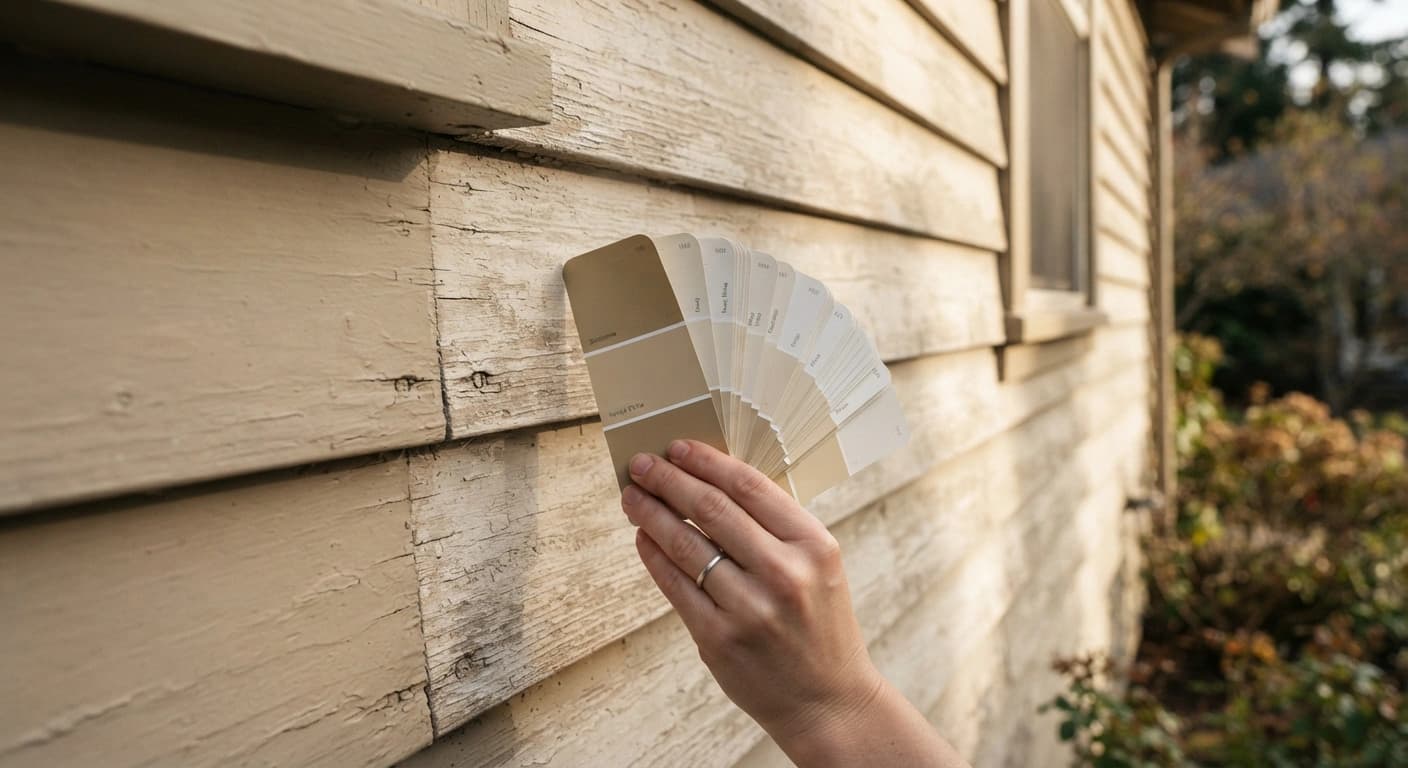
Look for exterior lines labeled UV-resistant or fade-resistant, and ask how your exact color performs in direct sun. Shades within one line do not all hold up equally. A color consultation is the easiest way to sort that out, because you see samples on your own walls in your own light before you commit.
Prime and apply a full-thickness coat
Primer gives the finish coat a sound surface to grip and helps color go on evenly. Apply each coat at the thickness the label calls for, because thin coats leave less pigment on the wall to fight UV. Good prep matters as much as the paint itself, and seeing how painting companies in Baton Rouge handle prep work shows what that looks like in practice.
Pick a calm weather window
Painting in direct afternoon sun, strong wind, or damp conditions can keep paint from forming an even film. Follow the temperature range printed on the can, and work around the house so each wall is painted in shade when possible.
Rinse the siding once or twice a year
Dirt, pollen, and mildew dull color and hold moisture against the paint. A garden hose and a mild detergent are usually enough. Keep the pressure low if you use a pressure washer, since too much force can damage the paint.
Can you fix faded colors, or is it time to repaint?
Light fading can sometimes be washed back to life, but chalky or patchy paint needs a fresh coat. Try the chalk test: rub your palm or a damp cloth across the wall in full sun. White powder on your skin means the binder is breaking down.
| What you see | What it likely means | Best move |
|---|---|---|
| Dull color, no powder on your hand | Early fading | Rinse gently and recheck each season |
| White powder on your palm | Chalking | Wash the wall, then repaint |
| Fading plus peeling or cracks | The paint film is failing | Prep the surface and repaint |
Spot touch-ups rarely blend well with faded siding. Fresh paint is often richer than the surrounding weathered surface, making the repaired area noticeable. Repainting the entire wall or elevation creates a more consistent color and finish while adding a fresh layer of protection.
If you are not sure it is time, these five signs your home needs residential exterior painting can help you decide. When fading comes with peeling or cracks, the signs of a bad exterior paint job after one season point to causes beyond sun. And when the walls are ready, a full exterior painting project covers prep, painting, and a final walkthrough with you.
How Swift Painting helps Greater Baton Rouge homes hold their color
Swift Painting works with homeowners across Greater Baton Rouge and Livingston Parish, and the color conversation starts early. Projects begin with a color consultation, where on-site samples show you how a shade reads in your own light. A few facts that help when you are choosing a painter:
- 1Louisiana licensed home improvement contracting company, insured with Workmen's Comp and General Liability through LWCC
- 2Chooz "Top Pro" award winner for painting contractors in Baton Rouge, with a Chooz Score of 88.1%
- 3Ranked in the top 99% of Louisiana contractors per BuildZoom
- 4Same-day, on-site estimate before the crew leaves
Let's keep your home's color looking fresh
Faded colors do not have to stay that way. If your siding looks washed out, Swift Painting can walk your home, check how the paint is holding up, and talk through color and product choices before the crew arrives. You get the estimate the same day, before we leave. Get a Free Estimate, or call (225) 414-6312 to talk it through with our team. Your home can look like itself again, and we would love to help you get there.
Frequently asked questions
How long before exterior paint starts to fade?
It depends on the color, the exposure, and the paint line. Bold shades on south and west walls often look tired first, while light neutrals on shaded sides can hold their color far longer. Most exterior paint jobs need a fresh look every 5 to 10 years, depending on the surface and how much sun it takes.
Which side of a house fades first?
South and west walls usually fade first because they get the longest stretch of direct sun. North walls get the least, and east walls mostly see gentler morning light.
Can interior paint fade from sunlight through windows?
Yes. Direct sun through glass, plus heat from bulbs and shifting room temperatures, can lighten paint over time, mostly near windows. Window treatments that cut direct sun help, and a sunny room that has already faded is a good candidate for a fresh interior painting update.
Does paint sheen affect how fast color fades?
Lower sheens such as flat tend to chalk and fade sooner on sun-exposed walls, so many painters step up to satin or low-luster for exposed siding. The right sheen still depends on the surface and the look you want.
What is chalking, and is it the same as fading?
Chalking is the powdery residue left when the binder breaks down. Fading is the color loss you see. The two usually show up together, but chalking is the stronger sign that the paint film is wearing out.