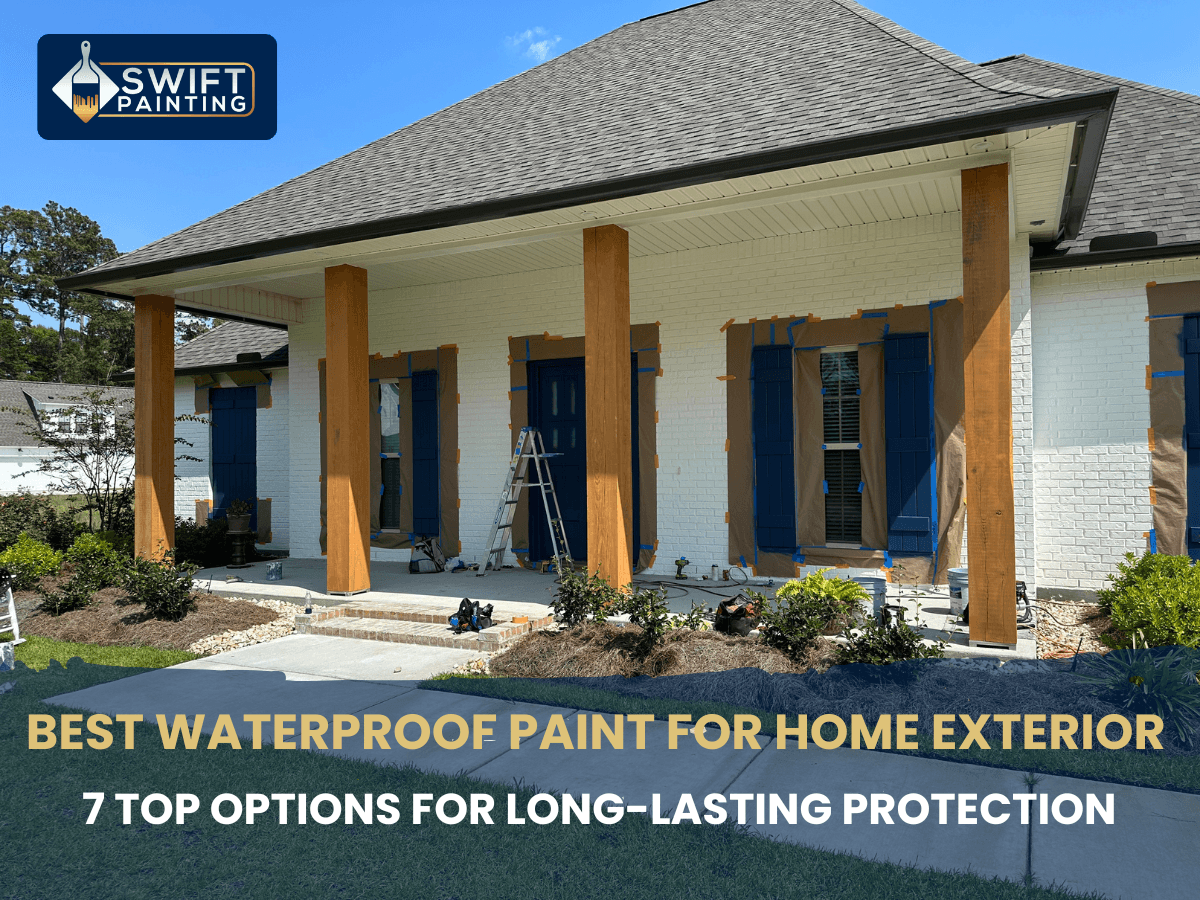
The best waterproof paint for a home exterior is usually a premium 100% acrylic coating. It flexes with your siding as temperatures and humidity change, which keeps paint from cracking, peeling, and letting moisture in. That flexibility is the biggest reason acrylic leads the pack for weatherproof durability, especially on wood homes.
Not every exterior paint is built for the same job. Some coatings shed water, some fight UV fading, and others hold off mildew or bridge cracks in stucco. In South Louisiana, where heat, humidity, and heavy rain all hit the same siding, the wrong match shows up as peeling, chalking, and mildew streaks long before a repaint should be due.
Below, we walk through seven exterior paint options, what each one does best, and where it falls short, so you can match the right coating to your home.
Key Takeaways
Premium 100% acrylic is the strongest all-around choice for weatherproof durability, especially on wood siding, because it moves with the wood instead of cracking.
Match the coating to the surface. Solid color stains suit aging wood, and elastomeric coatings suit stucco, masonry, and concrete, not wood siding.
UV-resistant formulas protect sun-baked walls from fading and chalking, and mildew-resistant formulas earn their place on shaded, humid sides of the house.
Most exterior paint is water-resistant, not fully waterproof. A good coating sheds rain while letting trapped vapor escape.
Paint alone does not decide the result. Damp wood, failing caulk, and skipped primer cause many early failures, so prep and moisture fixes come first.
Why Waterproof Exterior Paint Matters
Exterior paint does more than improve curb appeal. It serves as a protective layer between your home and the elements.
Rain, humidity, sunlight, and seasonal temperature changes constantly affect siding, trim, and other exterior components. Over time, moisture can work its way into small cracks and gaps, creating conditions that contribute to rot, mildew growth, peeling paint, and structural deterioration.
A quality coating helps slow that process. While no paint can completely eliminate the effects of weather, "the right product can significantly improve how well exterior surfaces withstand long-term exposure."
This is especially important for wood homes. Wood naturally absorbs and releases moisture as environmental conditions change. A coating that can move with the wood while maintaining protection tends to perform better over time.
7 best exterior paint options for weatherproof durability
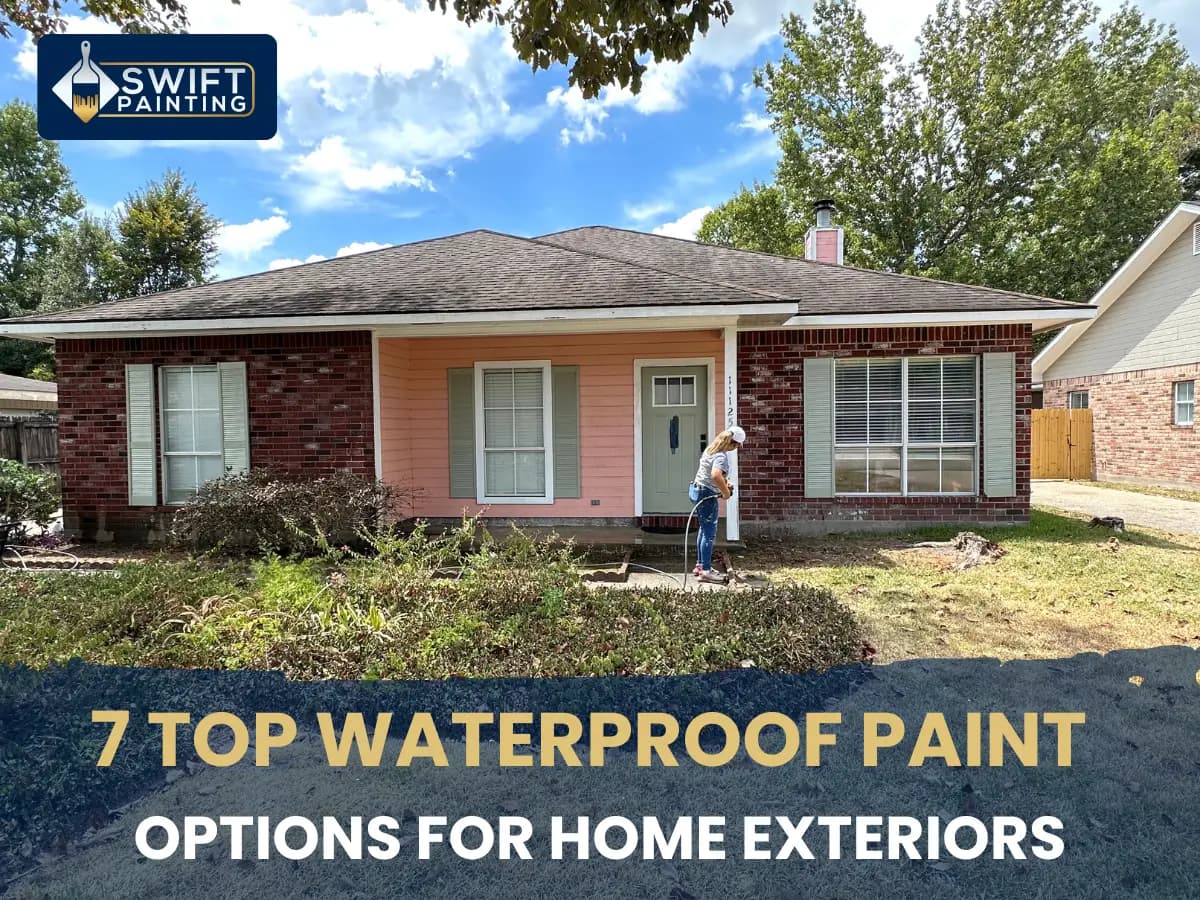
1. Premium 100% Acrylic Paint
For most homes, premium acrylic paint remains the strongest overall choice.
Unlike older paint technologies, acrylic coatings maintain flexibility as temperatures and humidity levels change. This flexibility helps reduce cracking and peeling, particularly on wood siding and trim.
Many professional painters prefer acrylic systems because they provide dependable adhesion, moisture resistance, and long-term color retention.
Popular examples include products from Sherwin-Williams, Benjamin Moore, Behr, and PPG. While individual product lines vary, premium acrylic coatings consistently rank among the most reliable options for residential exteriors.
2. Acrylic Latex Paint
Acrylic latex paint offers many of the same benefits as premium acrylic products at a lower price point.
It provides good adhesion, weather resistance, and ease of application, making it a practical choice for many repainting projects.
Although it may not deliver the same lifespan as higher-end coatings, it can still provide years of protection when applied correctly and maintained properly.
For homeowners looking for a balance between performance and budget, acrylic latex remains a common choice.
3. Self-Priming Exterior Paint
Self-priming products can simplify the painting process by reducing the number of coats required on previously painted surfaces.
These coatings are often used during repaint projects where the existing finish remains in relatively good condition.
While self-priming paint doesn't eliminate the need for preparation, it can help save time while still providing solid protection against weather exposure.
4. UV-Resistant Exterior Paint Systems
Sunlight is one of the most overlooked causes of paint failure.
Ultraviolet rays gradually break down paint binders and pigments, leading to fading, chalking, and surface deterioration. Homes that receive direct sun exposure for much of the day often benefit from coatings formulated to resist UV damage.
Many premium acrylic systems incorporate advanced UV-resistant technology that helps maintain appearance and performance for longer periods.
5. Mildew-Resistant Exterior Paint Formulas
In humid environments, mildew can become a recurring problem.
Paints formulated with mildew-resistant additives help discourage growth on exterior surfaces while preserving appearance. Although these coatings are not a substitute for proper moisture management, they can contribute to longer-lasting results in damp climates.
For homes surrounded by shade, trees, or high humidity, this feature is often worth considering.
6. Solid Color Exterior Stains
Solid color stains are frequently overlooked, yet they can be an excellent option for older wood homes.
Unlike traditional paint, stains penetrate the wood surface rather than forming a thick film on top. This can reduce the likelihood of peeling and make maintenance easier over time.
While stains don't work for every project, they are often worth considering when dealing with aging wood siding that has experienced repeated paint failures.
7. Elastomeric Coatings
Elastomeric coatings are designed to create a thicker protective membrane than standard paint.
These products are commonly used on stucco, masonry, and concrete because they can bridge small cracks and provide strong moisture resistance.
Although elastomeric systems perform well on certain substrates, they are generally not the first choice for traditional wood siding. Most wood homes achieve better results with high-quality acrylic coatings.
What Is the Best Waterproof Paint for Wood Siding?
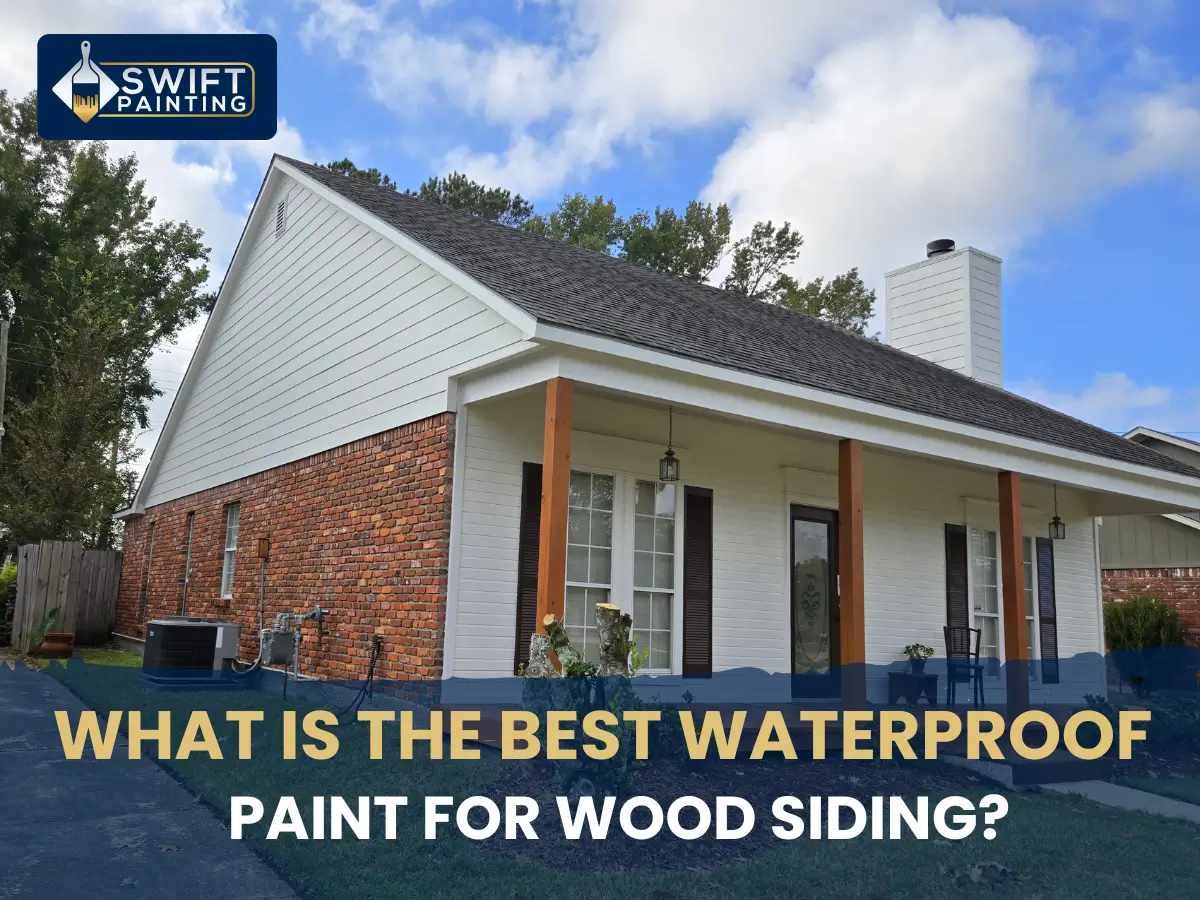
For most wood-sided homes, premium acrylic paint remains the preferred option.
Wood naturally expands and contracts as humidity and temperatures change. A rigid coating can crack under this movement, allowing moisture to enter and eventually cause paint failure.
Acrylic coatings are better suited to handle this movement. Their flexibility helps maintain adhesion while protecting the surface from moisture and UV exposure.
Proper preparation is equally important. Even the best paint will struggle to perform if applied over damaged wood, failing caulk, or moisture-related problems.
When evaluating products, homeowners should focus on the complete system rather than the paint alone. Surface preparation, priming, caulking, and application techniques all contribute to long-term performance.
Common Reasons Exterior Paint Fails on Wood Homes
Many paint failures are not caused by the paint itself.
One of the most common issues is painting over damp wood. Moisture trapped beneath the coating can eventually force the paint away from the surface.
Poor surface preparation is another frequent problem. Dirt, mildew, chalking, and loose paint interfere with adhesion and reduce durability.
Skipping primer, using incompatible products, or applying paint under unfavorable weather conditions can also shorten the lifespan of a finish.
In some cases, the underlying issue is not the paint at all. Improper flashing, leaking gutters, failed caulking, or moisture intrusion behind siding can all contribute to recurring paint problems.
Identifying and addressing these issues before painting often leads to better long-term results.
How Climate Affects Paint Performance
The environment surrounding your home plays a major role in how long paint lasts.
Homes located in humid regions often deal with moisture-related challenges that encourage mildew growth and place additional stress on coatings.
Properties exposed to intense sunlight face greater risk of fading and UV-related deterioration.
Areas with significant temperature fluctuations can cause repeated expansion and contraction of exterior materials, increasing the likelihood of cracking and peeling.
Choosing a paint system that matches local conditions can help improve durability and reduce maintenance requirements.
Features Worth Looking For
When comparing exterior coatings, several characteristics tend to matter more than marketing claims.
Strong adhesion helps paint remain bonded to surfaces for years. Flexibility allows the coating to accommodate seasonal movement. Moisture resistance helps limit water penetration, while UV protection reduces fading and deterioration caused by sunlight.
Mildew resistance can also be beneficial in humid environments, particularly on shaded elevations that remain damp for longer periods.
Rather than focusing on a single feature, homeowners should evaluate how well a product balances these performance factors.
Match the paint to your home and the weather has less to work with
Choosing the right exterior coating is about more than selecting a popular brand. The best results come from matching the paint system to the home's materials, environmental conditions, and maintenance expectations.
For most wood-sided homes, premium acrylic coatings continue to provide the most reliable combination of durability, flexibility, and weather protection. Other options, such as solid color stains or specialized coatings, may be appropriate in specific situations, but understanding the needs of the surface is the first step toward making a smart decision.
At Swift Painting LLC, many of our exterior projects involve wood siding and trim that has to handle South Louisiana sun, humidity, and heavy rain year after year. We match the coating to the surface, fix moisture and caulk problems before paint goes on, and apply the finish in conditions that let it cure well.
Here is what stands behind that work:
1. Louisiana licensed home improvement contracting company, insured with Workmen's Comp and General Liability through LWCC
2. Chooz Top Pro award winner for painting contractors in Baton Rouge (Chooz Score 88.1%)
3. Ranked in the top 99% of Louisiana contractors on BuildZoom
4. Same-day, on-site estimate before the crew leaves
Not sure which coating fits your home? Get a free estimate for our exterior painting services and we will walk the house with you, then talk through the options that suit your siding.
Frequently Asked Questions
What is the longest-lasting exterior paint?
Premium 100% acrylic paint is generally considered one of the longest-lasting options because it provides strong adhesion, flexibility, and resistance to weather-related wear.
Are solid color stains better than paint?
Not necessarily. Solid stains can perform well on older wood surfaces and may be easier to maintain, but the best choice depends on the condition of the substrate and the desired appearance.
Should I use elastomeric paint on wood siding?
In most cases, premium acrylic paint is a better option for wood siding. Elastomeric coatings are generally more suitable for stucco, masonry, and concrete surfaces.
How often should a home's exterior be repainted?
Most quality exterior coatings last between eight and fifteen years, depending on climate, preparation, and maintenance.
What paint works best on wood siding?
High-quality acrylic paint is often the preferred choice for wood siding because it can expand and contract with the wood while maintaining protection.
Is exterior paint waterproof? Is waterproof paint really waterproof?
Most exterior paint products are water-resistant rather than completely waterproof. A quality acrylic coating sheds rain and blocks most moisture intrusion, but it still allows trapped water vapor inside the wall to escape rather than sealing the surface completely airtight.
Does exterior paint prevent mildew?
Many products contain mildew-resistant additives, but controlling moisture remains the most important factor in preventing growth.
Ready to Transform Your Home?
Whether you need exterior repainting, interior transformations, or custom cabinet spray refinishing, Swift Painting LLC delivers flawless results engineered for Louisiana homes.
Contact our expert team today for your free written proposal.