Professional painting advice and contractor vetting tips from Swift Painting LLC.
Key Takeaways
Thorough surface preparation is essential before painting in South Louisiana.
Always verify licensing, workers comp, and general liability insurance before hiring.
Consult with Swift Painting LLC for expert Sherwin-Williams color matching.
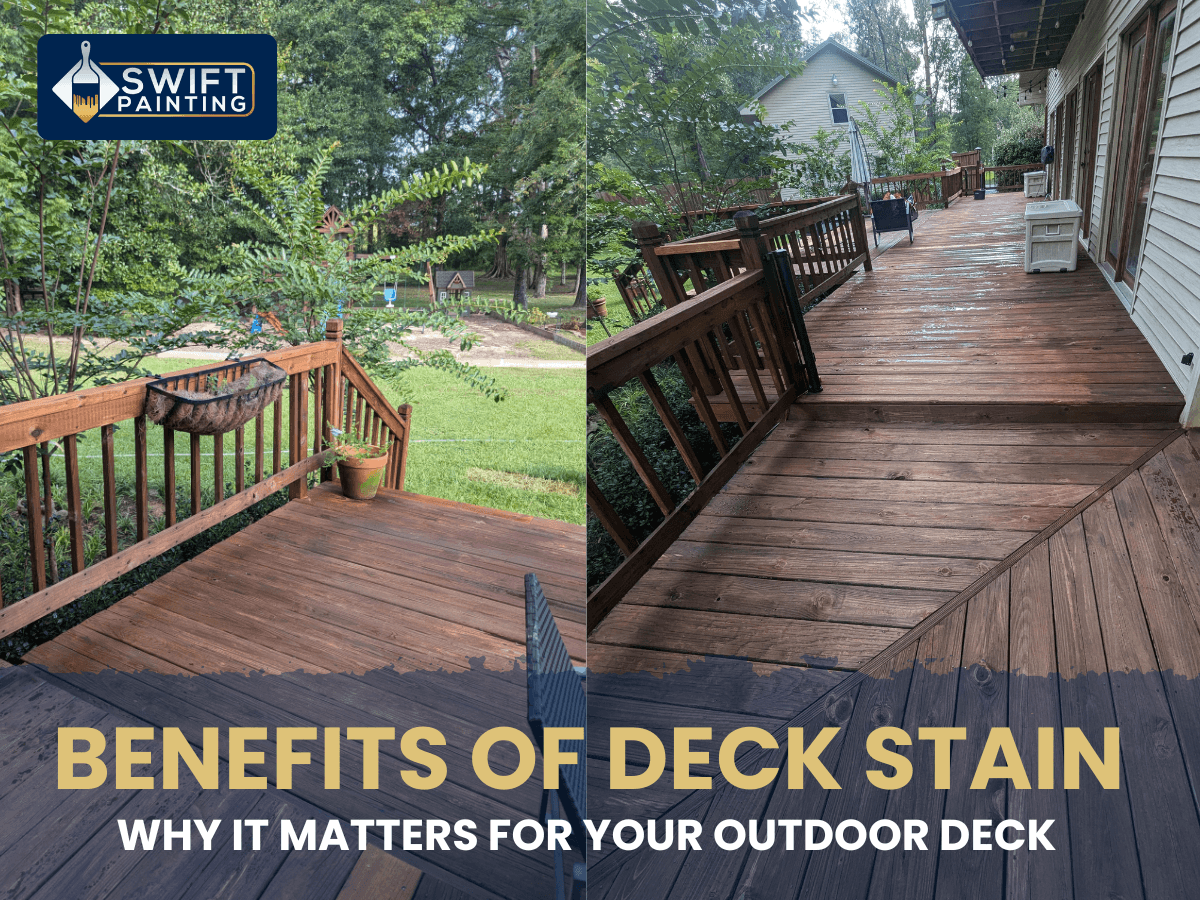
Benefits of Deck Stain: Why It Matters for Your Outdoor Deck
A quality deck stain does far more than improve appearance. It protects wood from moisture, sun damage, cracking, and premature aging while helping your deck last years longer with less maintenance. For homeowners investing in outdoor living spaces, understanding the real benefits of deck stain can help prevent expensive repairs and preserve the natural beauty of the wood.
Outdoor decks face constant exposure to changing weather conditions. Rain, UV rays, humidity, foot traffic, and seasonal temperature swings slowly break down untreated wood. Over time, this can lead to fading, splintering, warping, mold growth, and structural deterioration. Staining acts as a protective barrier that helps reduce those risks while keeping the deck visually appealing.
Many homeowners think of staining as purely cosmetic, but its real value comes from long-term wood protection and preservation. A properly maintained deck often lasts significantly longer than one left untreated, especially in climates with intense sunlight or heavy moisture exposure.
Why Outdoor Decks Deteriorate Faster Than Most Home Features
Unlike indoor flooring or covered surfaces, decks are constantly exposed to the elements. Wood naturally absorbs moisture and expands or contracts as temperatures change. Repeated cycles of wetness and drying slowly weaken the fibers inside the boards.
Sunlight creates another major issue. Ultraviolet rays break down lignin, the substance that helps hold wood fibers together. As this happens, the surface becomes dry, faded, and brittle. This is one reason untreated decks often turn gray after prolonged sun exposure.
Even high-quality hardwoods are vulnerable without regular maintenance. According to the USDA Forest Products Laboratory, "prolonged moisture exposure accelerates fungal decay and structural damage" in outdoor wood surfaces.
Staining helps minimize these problems by adding a protective layer that reduces water absorption and slows UV-related deterioration.
The Biggest Advantage Is Long-Term Wood Protection
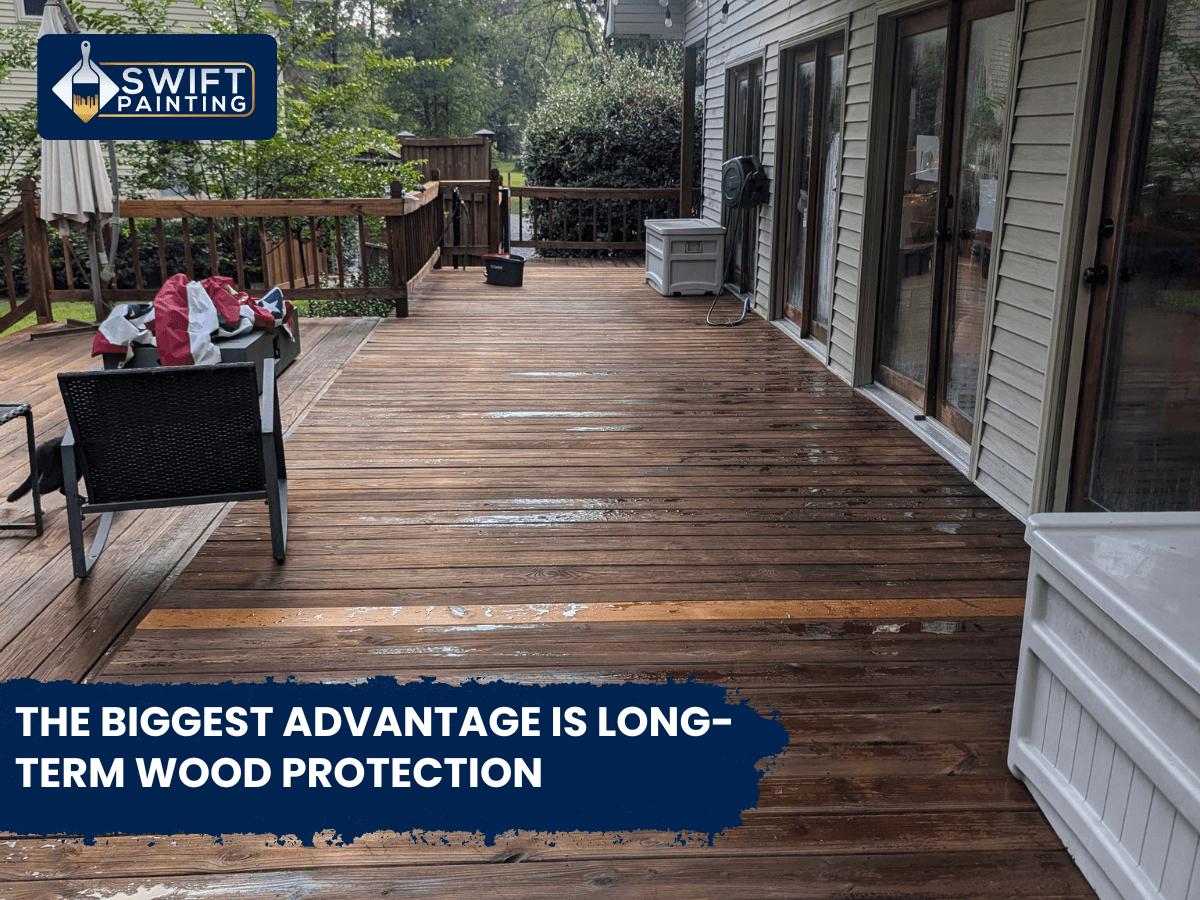
One of the most important reasons homeowners stain their decks is to improve durability. Wood is naturally porous, which means it easily absorbs water during rain or humid weather. When moisture enters the wood repeatedly, it can lead to swelling, cracking, mildew, and eventual decay.
A quality stain creates moisture resistance that helps limit how much water penetrates the boards. This becomes especially important during rainy seasons or in humid climates where decks remain damp for extended periods.
At the same time, stains help with protecting wood from UV exposure. Sunlight slowly dries out wood fibers and weakens the surface layer. Many stains include UV-blocking pigments that help reduce fading and surface damage caused by direct sunlight.
This combination of sun and water protection is what makes staining such a valuable form of outdoor wood maintenance, especially for homeowners already noticing weather-related wear.
Staining Helps Prevent Rot and Structural Damage
Rot rarely appears overnight. It usually develops gradually as trapped moisture creates the ideal environment for fungal growth. Areas where water pools or airflow is limited are especially vulnerable.
Once rot begins, boards may soften, crack, or become unsafe to walk on. Repairing structural damage often costs far more than routine maintenance.
One overlooked advantage of staining is its role in preventing rot and decay before it starts. By helping wood dry more evenly and resist prolonged moisture absorption, stain reduces the conditions that allow fungi and mold to thrive.
The Environmental Protection Agency notes that "controlling moisture is one of the most effective ways to reduce mold growth" around the home, including exterior wood structures.
A Well-Stained Deck Ages More Evenly
Untreated decks often weather unevenly. Some sections receive direct sun all day while others remain shaded and damp. This inconsistency causes discoloration, patchiness, and irregular wear patterns.
Staining helps regulate how the surface responds to environmental exposure. Instead of rapidly deteriorating in isolated areas, the deck tends to age more uniformly over time.
This matters not only for appearance but also for maintenance planning. A deck that wears evenly is usually easier and less expensive to maintain compared to one with severe isolated damage.
Many homeowners are surprised by how much staining helps with deck preservation even several years after installation. Rather than replacing boards prematurely, they can often maintain the structure with periodic care and reapplication.
Stain Enhances the Natural Character of Wood
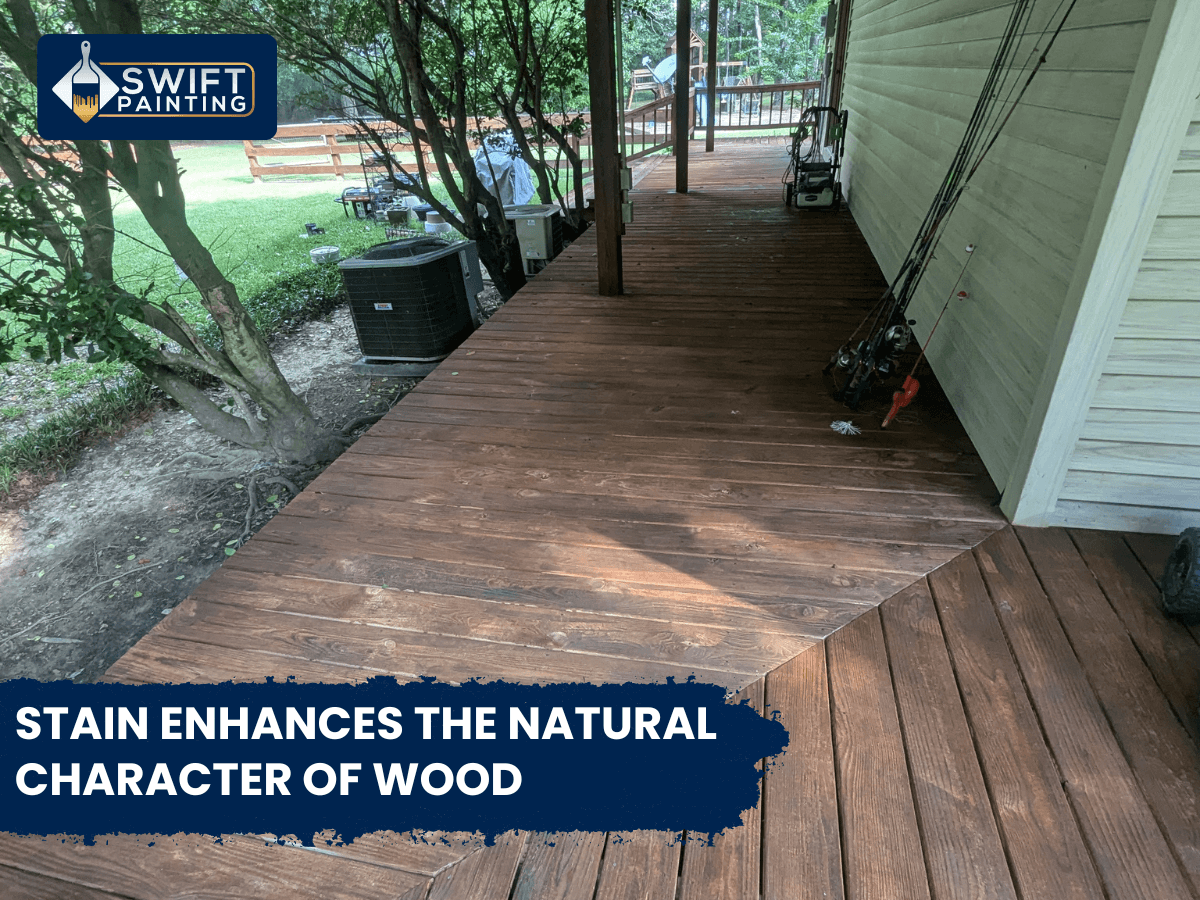
While protection is the primary benefit, appearance still matters. Wood decks add warmth and texture to outdoor spaces, and stain helps bring out those qualities instead of hiding them.
Unlike paint, which creates a solid surface coating, most stains penetrate the wood grain. This allows the texture and natural patterns to remain visible.
For many homeowners, enhancing wood grain is one of the biggest reasons they choose stain over paint. Cedar, redwood, pressure-treated pine, and hardwood decking all have distinctive grain patterns that stain can highlight beautifully.
Transparent and semi-transparent stains are especially popular because they preserve the organic look of natural wood while still offering weather resistance.
Weather Exposure Is More Damaging Than Most Homeowners Realize
Weather conditions affect decks year-round, not just during storms. Heat, humidity, frost, rain, and direct sunlight all contribute to gradual deterioration.
Cold climates create freeze-thaw cycles that force moisture deeper into cracks. Hot climates dry out wood and accelerate fading. Coastal environments introduce salt exposure and high humidity. Even moderate climates still expose decks to repeated seasonal changes.
This is why weather protection for decks is so important regardless of location, particularly in climates with strong sunlight and heavy rain exposure.
Regular Staining Can Reduce Long-Term Maintenance Costs
Replacing deck boards, repairing railings, or rebuilding damaged framing can become expensive quickly. In many cases, those issues develop because routine protection was neglected for years.
Staining is often considered one of the most cost-effective maintenance tips for homeowners with wood decks because it helps delay larger structural problems.
Instead of paying for extensive repairs, homeowners can preserve the deck through ongoing care. This approach usually saves money over the long term while keeping the outdoor space functional and attractive.
Choosing the right products also plays a major role in durability and maintenance costs over time. Many homeowners compare deck stain brands and read consumer reviews before buying, since durability and UV performance can vary noticeably between formulas. A stain built for heavy sun and humidity typically holds its color longer than a generic all-purpose option, which is worth factoring in alongside the deck material itself.
It also helps maintain property value. A worn, splintered, or deteriorating deck negatively affects curb appeal, while a well-maintained deck improves the overall appearance of the home.
Why Fading Happens So Quickly on Untreated Wood
Wood naturally changes color outdoors, especially under constant sun exposure. UV rays break down pigments within the wood fibers, causing surfaces to lose their original tone and eventually turn gray.
Without protection, this process can happen surprisingly fast, particularly in areas with strong sunlight.
Many stains include pigments and UV inhibitors designed to help prevent fading while maintaining a richer, more consistent appearance. Darker stains generally provide stronger UV protection because they absorb more sunlight before it reaches the wood itself.
Even lighter stains can slow the weathering process significantly compared to leaving wood untreated.
Different Wood Types Benefit Differently From Staining
Not all decking materials respond the same way to outdoor exposure. Softer woods such as pine typically absorb moisture faster and may require more consistent maintenance. Hardwoods are naturally denser but can still suffer UV damage and surface cracking over time.
Pressure-treated lumber often contains preservatives that resist insects and decay, but it still benefits from staining because preservatives alone do not fully block moisture or sunlight.
Cedar and redwood naturally resist some forms of decay, yet staining still improves their longevity and color retention.
Understanding these differences helps homeowners make smarter decisions about long-term wood protection and outdoor maintenance. It's also part of why the best deck material for curb appeal isn't just about the wood species itself, cedar, redwood, and pressure-treated pine can all look equally sharp once stained correctly, so the finish and maintenance plan often matter as much as the initial material choice.
Maintenance Becomes Easier Over Time
One underrated benefit of routine staining is that future maintenance often becomes simpler. A protected deck surface tends to collect less deep moisture damage and severe weathering compared to neglected wood.
Instead of full-scale repairs, maintenance often becomes more predictable and manageable.
Small touch-ups and periodic refinishing usually cost far less than replacing damaged sections entirely.
Why Deck Preservation Matters Beyond Appearance
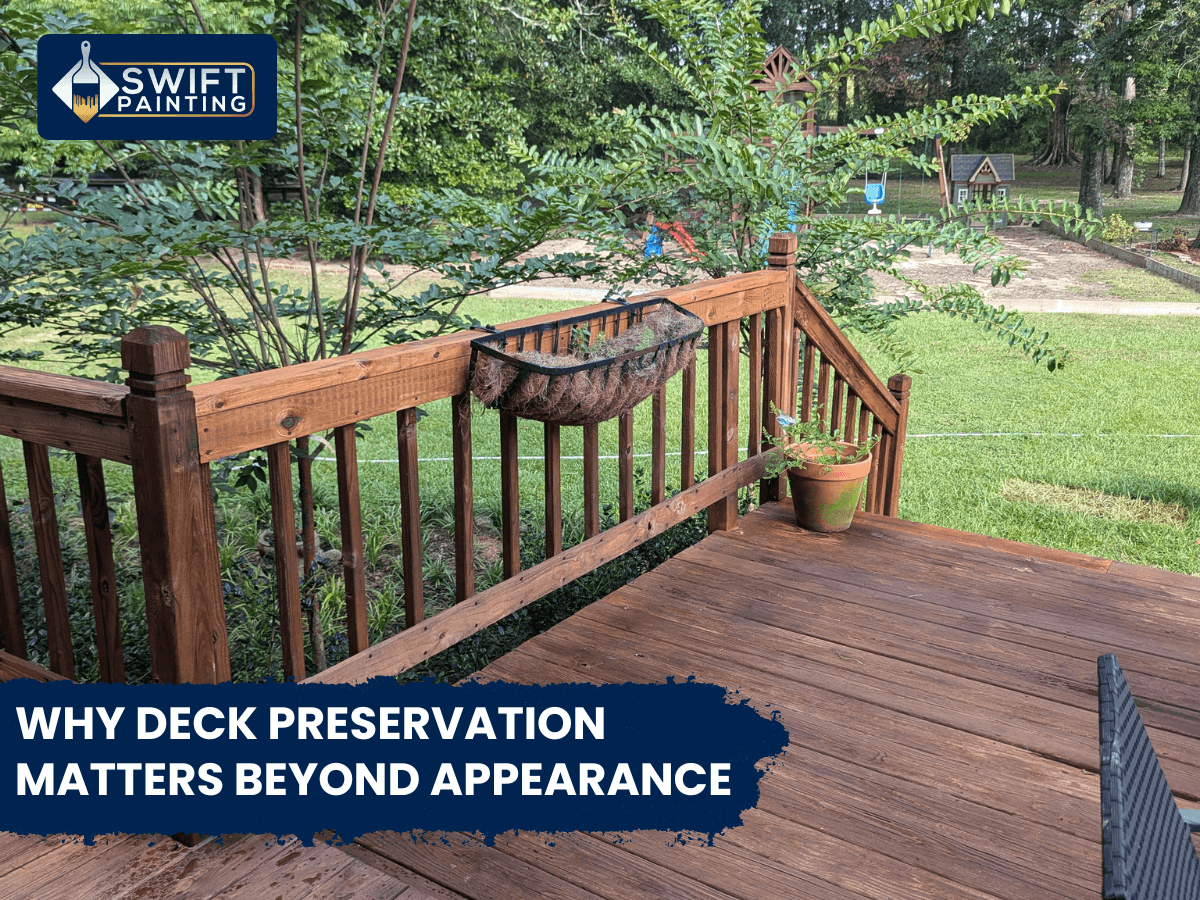
Many homeowners initially focus on aesthetics, but the deeper value of staining lies in preserving the structure itself.
Decks are major investments that contribute to outdoor living, entertaining, and property value. Allowing the wood to deteriorate prematurely shortens the usable lifespan of the entire structure.
Consistent care supports deck preservation by helping maintain board integrity, reducing moisture-related expansion, and minimizing environmental stress.
Over the years, these small protective measures can make a substantial difference in how long a deck remains safe, attractive, and functional.
Companies such as Swift Painting LLC often see firsthand how neglected decks require significantly more restoration work compared to properly maintained ones.
Final Thoughts
Staining a deck is not just about improving color or appearance. It is one of the most effective ways to protect wood from moisture, sunlight, fading, and long-term structural deterioration. A well-maintained deck lasts longer, looks better, and requires fewer expensive repairs over time.
From moisture resistance and UV defense to enhancing wood grain and helping prevent rot, the long-term advantages of staining make it an essential part of outdoor wood care. Homeowners who prioritize regular maintenance often enjoy safer, more attractive decks for many years while protecting the value of their investment.
FAQ Section
How does deck stain protect wood? Deck stain penetrates the wood surface and helps reduce moisture absorption while also providing protection from UV rays. This helps minimize cracking, fading, warping, and decay over time.
Does staining really extend the lifespan of a deck? Yes. Regular staining helps reduce environmental damage caused by rain, sunlight, humidity, and temperature changes. Proper maintenance can significantly increase deck lifespan compared to untreated wood.
Can deck stain help prevent mold and mildew? Stain helps limit excess moisture inside the wood, which reduces conditions that encourage mold and mildew growth. However, proper cleaning and airflow are also important.
Why does untreated wood turn gray? Sunlight breaks down wood fibers through UV exposure. Over time, this causes fading and the gray weathered appearance commonly seen on untreated decks.
Is staining better than painting a deck? Stain penetrates the wood and preserves the natural grain, while paint forms a surface coating. Many homeowners prefer stain because it offers protection while maintaining the authentic look of wood.
How often should a deck be re-stained? The timeline varies depending on climate, sun exposure, and foot traffic. Many decks benefit from maintenance every two to four years, though high-exposure areas may require more frequent attention.
Ready to Transform Your Home?
Whether you need exterior repainting, interior transformations, or custom cabinet spray refinishing, Swift Painting LLC delivers flawless results engineered for Louisiana homes.
Contact our expert team today for your free written proposal.