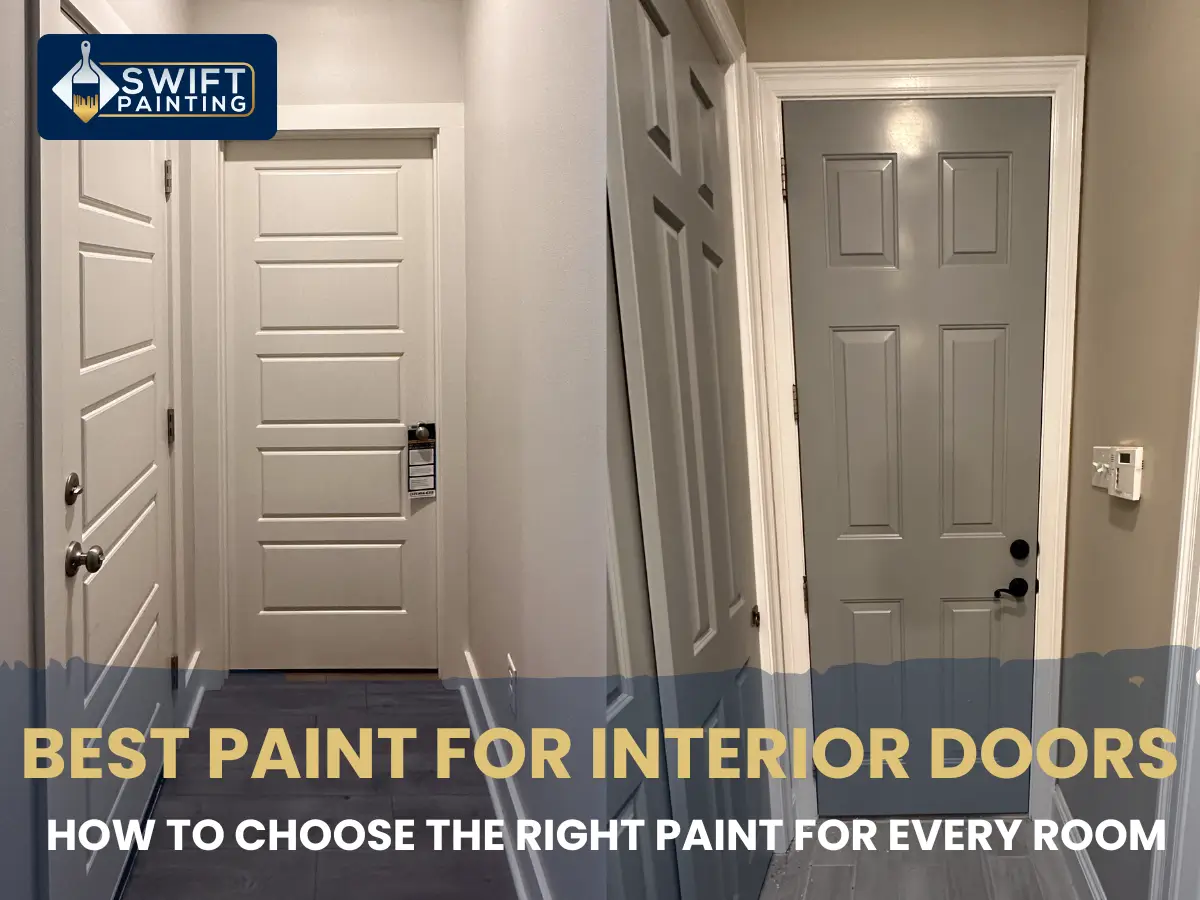
The best paint for interior doors is typically a high-quality acrylic enamel or waterborne alkyd paint paired with a satin or semi-gloss finish. However, the right choice depends on more than durability alone. The material of the door, the amount of daily traffic it receives, humidity levels within the room, and your desired appearance all influence which product will perform best over time.
Many homeowners focus on color first and paint quality second. In reality, selecting the proper coating often has a greater impact on long-term satisfaction than the color itself. A door that resists scuffs, fingerprints, moisture, and repeated cleaning will continue looking fresh years after the project is complete.
If you're looking for application techniques and project preparation, check out our guide on how to paint interior doors properly. This article focuses entirely on choosing the right paint before the first coat is ever applied.
Key Takeaways
Thorough surface preparation is essential before painting in South Louisiana.
Always verify licensing, workers comp, and general liability insurance before hiring.
Consult with Swift Painting LLC for expert Sherwin-Williams color matching.
Why Interior Doors Require Different Paint Than Walls
Walls and doors may sit side by side, but they experience very different conditions.
Most walls are rarely touched. Interior doors are handled constantly throughout the day. They are opened, closed, bumped by furniture, exposed to oils from hands, and cleaned far more frequently than painted drywall.
Because of this, standard wall paint often falls short on doors. While it may provide adequate color coverage, it is not always formulated to withstand repeated contact and cleaning. A quality interior door paint contains stronger resins that cure into a more durable surface, helping it resist wear while maintaining a smoother appearance.
The difference becomes especially noticeable in busy areas such as hallways, bedrooms, bathrooms, laundry rooms, and children's spaces.
Understanding Modern Paint Technologies
Before comparing brands, it's important to understand the different paint technologies available today. The type of paint for interior doors can significantly affect appearance, durability, maintenance, and longevity.
Acrylic Enamel Paint
Acrylic enamel has become one of the most popular options for residential painting projects.
It offers excellent durability, low odor, fast drying times, and easy cleanup with soap and water. Modern formulations also provide impressive resistance to fading and yellowing, making them suitable for both light and dark colors.
For most homeowners, acrylic enamel provides an ideal balance between performance and convenience.
Waterborne Alkyd Paint
Waterborne alkyd products are often considered the premium choice for doors and trim.
These coatings combine the smooth finish and hardness traditionally associated with oil-based products while retaining the easy cleanup of water-based paints.
Many professional painters recommend waterborne alkyds when homeowners want an exceptionally smooth appearance and long-lasting durability.
Traditional Oil-Based Paint
Oil-based coatings were once the standard recommendation for doors and trim.
Although they still provide a hard, durable finish, they are less commonly used today because of longer drying times, stronger odors, and a tendency to yellow over time.
For most residential applications, modern waterborne technologies provide similar performance with fewer drawbacks.
Which Paint Finish Is Best for Interior Doors?
The paint finish for interior doors affects both appearance and performance. Choosing the right sheen is just as important as selecting the right paint technology.
Satin Finish
Satin remains one of the most versatile finishes available.
Its subtle sheen provides a smooth appearance without drawing excessive attention to imperfections. Satin is also easier to clean than flat paint while maintaining a softer, more contemporary look.
Many homeowners prefer satin for bedroom door paint because it offers durability without creating excessive shine.
Semi-Gloss Finish
Semi-gloss is often considered the industry standard for interior doors.
Its higher sheen improves cleanability and moisture resistance while providing additional protection against scuffs and fingerprints.
For families with children, pets, or busy households, semi-gloss often delivers the best balance of durability and maintenance.
High-Gloss Finish
High-gloss finishes create a dramatic, reflective appearance that works well in certain modern and contemporary designs.
While highly durable, they tend to highlight dents, scratches, and other surface imperfections more readily than satin or semi-gloss options.
For that reason, high-gloss finishes are typically best reserved for carefully prepared surfaces.
Best Paint for Different Door Materials
Not all doors are constructed from the same materials, which means paint selection should be adjusted accordingly.
Paint for Wood Doors
Paint for wood doors must balance durability with flexibility.
Natural wood expands and contracts as humidity levels fluctuate throughout the year. High-quality acrylic enamel and waterborne alkyd products generally accommodate this movement better than brittle coatings.
When selecting interior wood door paint, homeowners should prioritize adhesion, flexibility, and long-term durability.
MDF Doors
Medium-density fiberboard (MDF) doors are commonly used in modern homes because of their smooth, consistent surface.
These doors typically paint well but require products that adequately seal and protect exposed edges from moisture intrusion.
Hollow-Core Doors
Many modern interior doors are hollow-core units with factory-finished skins.
Because the surfaces are generally smooth and uniform, they often produce excellent results when paired with quality door-specific coatings.
Should Doors and Trim Use the Same Paint?
One of the most common questions homeowners ask is whether the same paint should be used on both doors and trim.
In many cases, the answer is yes.
Using the same paint type for doors and trim helps create a consistent appearance while simplifying maintenance and future touch-ups. Many professionals use the same product line and sheen level throughout the trim package for a cohesive look.
However, some homeowners prefer slightly different finishes depending on design goals. For example, satin may be used on doors while semi-gloss is reserved for trim.
The best approach depends on the style of the home, desired appearance, and maintenance expectations.
Choosing Paint Based on Room Type
Different rooms place different demands on painted surfaces. Paint colors for interior doors are also shifting by room: soft whites and warm off-whites remain the safest, most resale-friendly choice for doors throughout a home, while a growing number of homeowners are painting doors in deep, saturated tones — charcoal, forest green, navy — as an accent against lighter trim and walls. The color decision should always come after the paint technology and finish are settled, since a beautiful color in the wrong formula will still chip and dull faster than expected.
Bedroom Doors
Bedroom door paint should balance appearance and durability. Since these doors generally experience moderate traffic, satin finishes often work particularly well.
Closet Doors
Closet door paint is usually selected with aesthetics in mind because these doors experience less daily use than primary entry doors.
This allows homeowners greater flexibility when choosing finishes and colors.
Bathroom Doors
Bathrooms expose doors to changing humidity levels throughout the day.
In these spaces, moisture resistance becomes especially important. Semi-gloss finishes often provide additional protection against moisture-related wear.
Laundry Room Doors
Laundry rooms create similar conditions due to heat and humidity generated by appliances.
Selecting durable coatings with moisture resistance can help extend the life of the finish.
Low-VOC Paint Options for Interior Spaces
Indoor air quality has become an increasingly important consideration for homeowners.
Many modern paint manufacturers now offer low-VOC and zero-VOC products designed to reduce indoor emissions while maintaining durability.
Reviewing low-VOC paint guidance can help homeowners make informed decisions when selecting products for occupied spaces.
These options can be particularly beneficial in bedrooms, nurseries, and homes where occupants are sensitive to odors.
Paint Brands Professionals Frequently Recommend
While no single product is perfect for every project, several coatings consistently earn praise among painting professionals.
Benjamin Moore Advance is widely recognized for its smooth finish and durability.
Sherwin-Williams Emerald Urethane Trim Enamel is known for excellent hardness and long-term performance.
Sherwin-Williams ProClassic remains a popular choice because of its versatility and reliable results.
Behr Alkyd Enamel has also gained popularity among homeowners seeking a durable finish at a competitive price point.
Rather than focusing solely on brand names, homeowners should compare durability, cleanability, dry time, and resistance to yellowing when evaluating products.
How Long Should Interior Door Paint Last?
The lifespan of painted doors varies depending on product quality, environmental conditions, and daily use.
A well-coated bedroom or closet door may maintain its appearance for many years before requiring repainting. Doors in busy hallways, bathrooms, or family spaces may show signs of wear sooner due to heavier traffic.
Regular cleaning and proper maintenance can significantly extend the life of painted surfaces.
Signs It's Time to Repaint an Interior Door
Even the highest-quality coatings eventually show signs of wear.
Visible chipping, scuffing, fading, yellowing, or loss of sheen often indicate that a door is ready for refinishing. Moisture damage around edges and panels may also suggest the existing coating is no longer providing adequate protection.
Recognizing these signs early helps prevent more extensive repairs and keeps interior spaces looking well maintained.
Final Thoughts
Choosing the best paint for interior doors involves more than selecting a color. The right combination of paint technology, finish, durability, and room-specific performance can dramatically influence how a door looks and performs over time.
For most homes, a premium acrylic enamel or waterborne alkyd paired with a satin or semi-gloss finish provides the best balance of appearance, cleanability, and long-term durability. By focusing on performance rather than simply appearance, homeowners can make informed decisions that continue paying off for years.
At Swift Painting LLC, we help homeowners select coatings that match their needs, design goals, and lifestyle so every project delivers lasting value.
Frequently Asked Questions
What is the best paint for interior doors?
Most professionals recommend acrylic enamel or waterborne alkyd paint because these products provide excellent durability, smooth finishes, and easy maintenance. For color, warm whites and soft neutrals remain the most popular and resale-friendly choice, while deeper accent tones are gaining popularity on individual statement doors.
What type of paint for interior doors lasts the longest?
Waterborne alkyd paints are often considered among the most durable options available for residential interior doors.
Is satin or semi-gloss better for interior doors?
Both work well. Satin offers a softer appearance, while semi-gloss provides greater durability and easier cleaning.
Should doors and trim use the same paint?
In many homes, using the same paint type for doors and trim creates a consistent appearance and simplifies maintenance.
What is the best paint for wood interior doors?
High-quality acrylic enamel and waterborne alkyd products generally provide excellent performance on wood surfaces because they balance durability with flexibility.
Ready to Transform Your Home?
Whether you need exterior repainting, interior transformations, or custom cabinet spray refinishing, Swift Painting LLC delivers flawless results engineered for Louisiana homes.
Contact our expert team today for your free written proposal.