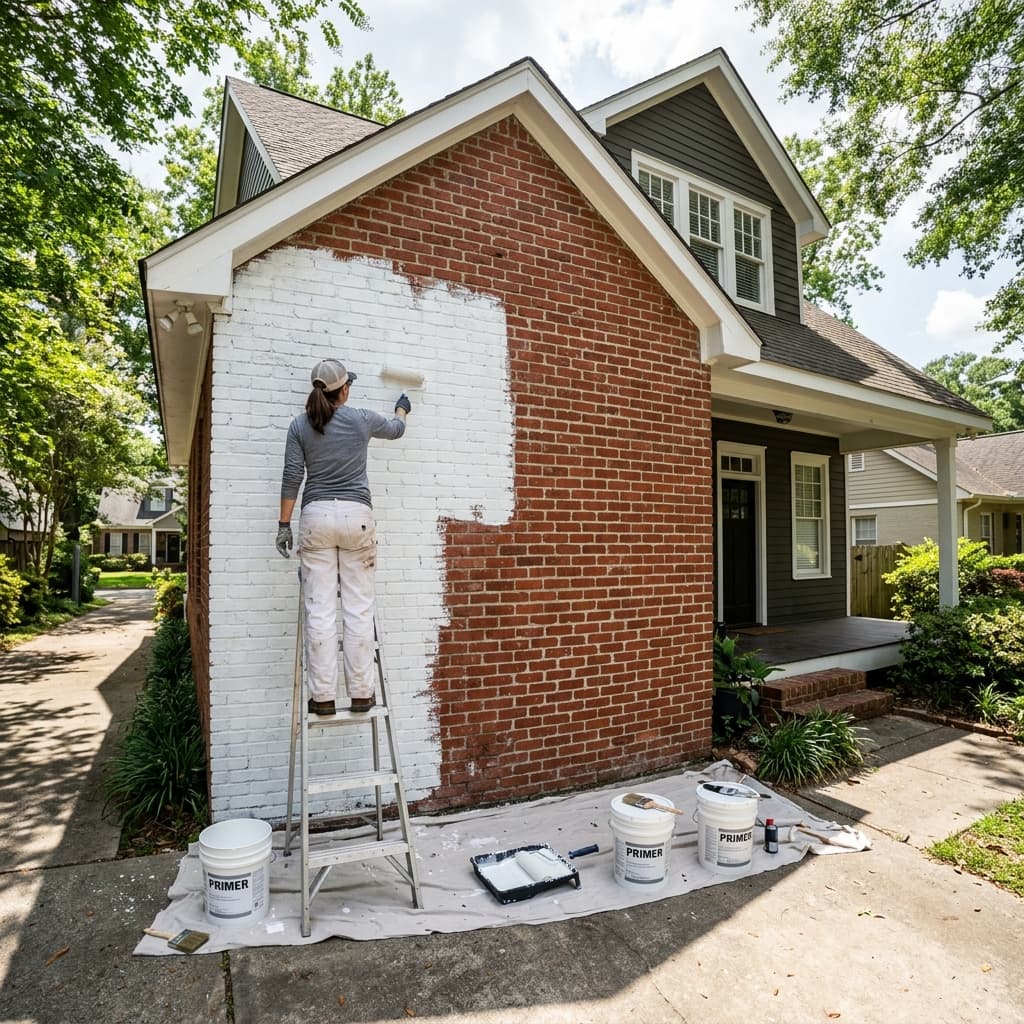
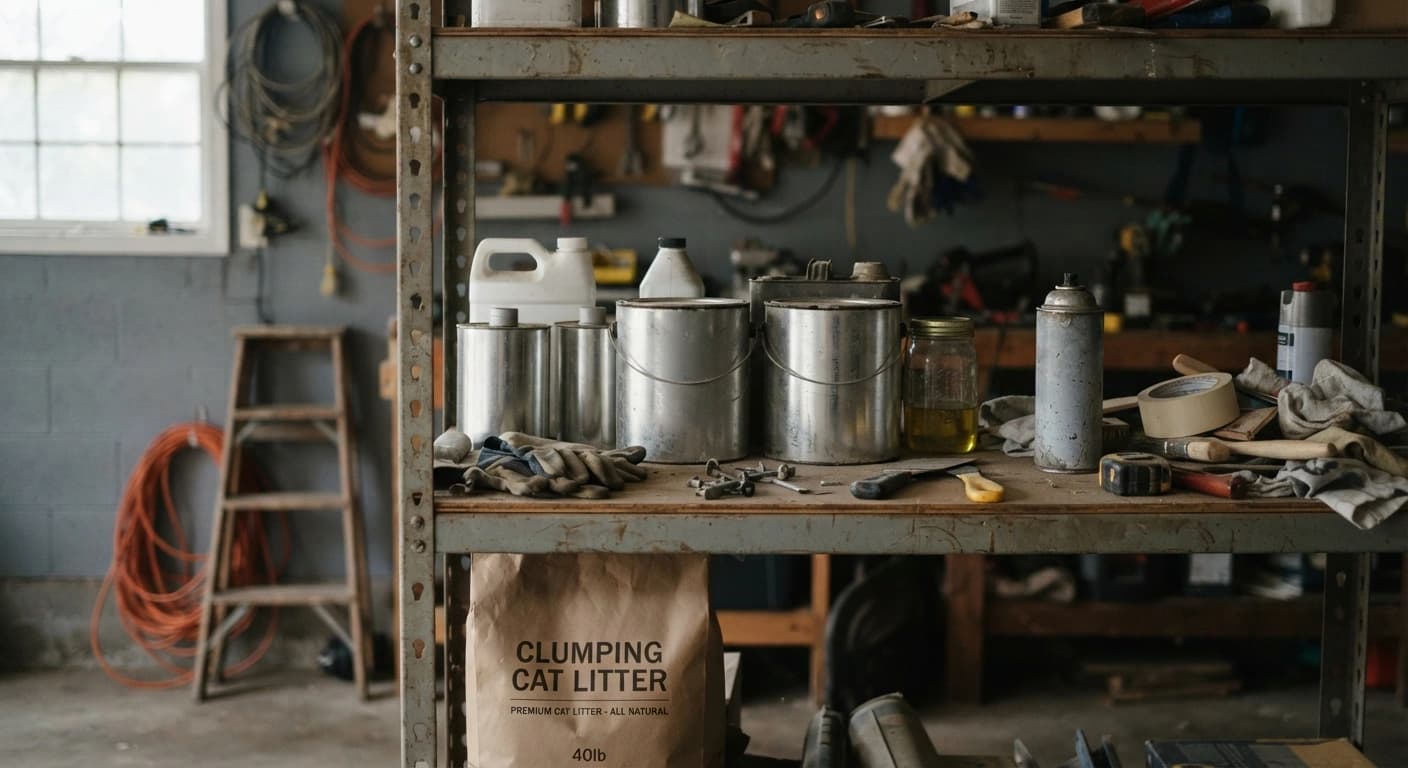
That half-empty can of wall paint has been sitting in the garage since the last project, and now it is taking up shelf space you want back. You can't pour it down a drain, and a can of liquid paint isn't allowed in the garbage cart either. Learning how to dispose of paint starts with one question: is it latex, oil-based, or spray paint? Each one follows different rules. This guide sorts your cans by type, walks through the safe way to dry out latex, and shows where to take everything else in Baton Rouge.
Key takeaways
Identify the paint type first, as latex, oil-based, and spray paints require different disposal methods.
Dry small amounts of leftover latex paint with kitty litter or a paint hardener. In East Baton Rouge Parish, fully dried cans can go in the garbage cart with the lid off.
Never pour paint down a drain or put liquid paint, oil-based paint, or spray cans containing product in the trash. Take them to an approved collection event.
Reuse or donate usable paint, and check local disposal guidelines before dropping off leftover paint or empty cans..
How to Dispose of Paint by Type: Latex, Oil-based, and Spray
The right way to dispose of paint depends on its type, and the label tells you which type you have. Latex paint, also sold as water-based or acrylic, cleans up with soap and water. Oil-based paint and stain call for mineral spirits or paint thinner. Spray paint comes in a pressurized can with a nozzle.
| Paint type | How to tell | In the garbage cart? | Where it goes |
|---|---|---|---|
| Latex (water-based, acrylic) | Cleans up with soap and water | Only when empty or fully dried out, lid off | Dry it at home, or take it to a collection day or ReStore |
| Oil-based paint and stain | Cleans up with mineral spirits or paint thinner | Never | Collection day (full cans can also go to ReStore) |
| Spray paint | Pressurized can with a nozzle | Not while anything is left inside | Collection day |
Two basic rules apply to all paint types. Never pour leftover paint down a sink, toilet, or storm drain, and never mix different leftover products in the same container. Improper disposal can harm the environment and contaminate wastewater or septic systems, while mixing products can cause unwanted chemical reactions.
How to Discard Old Paint at Home (latex only)
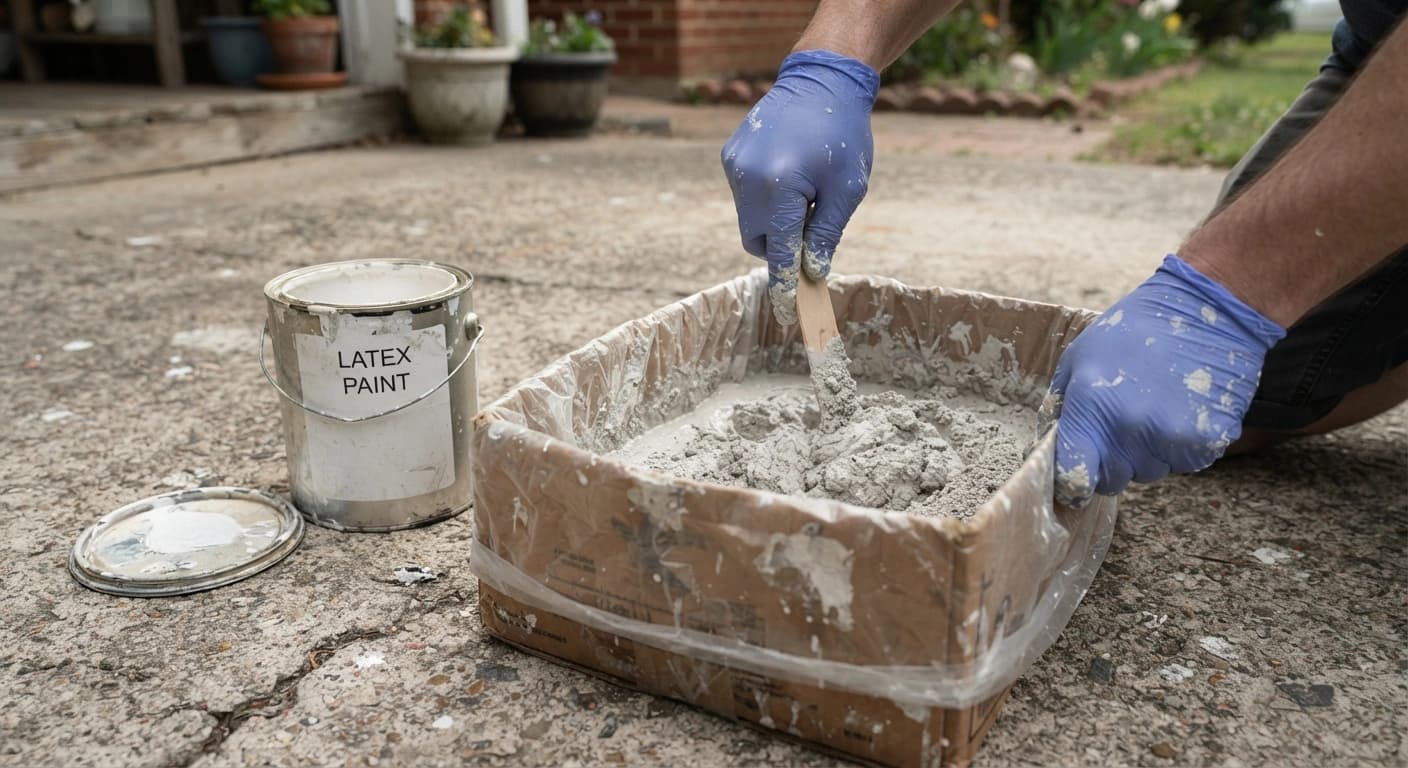
To discard old latex paint at home, stir in kitty litter, let the mixture set until it is solid all the way through, and put the can in your garbage cart with the lid off.
Check how much paint is left
Open the can and check how much paint remains. For partially filled cans, local disposal guidelines may allow small amounts to be mixed with an absorbent, such as kitty litter, and dried out before disposal. Larger amounts may need to be taken to a household hazardous waste collection event or donated if the paint is still usable. Oil-based paint should be handled separately according to local disposal guidelines.
Mix small amounts with kitty litter
Work outdoors or in a well-ventilated spot, away from children and pets. Take the lid off and stir in about an equal amount of kitty litter. Sawdust and shredded paper work too, and a commercial paint hardener does the same job if you follow the directions on its label. Keep stirring until the paint stops flowing, then let it sit until it is solid all the way through, including the bottom of the can.
Put the dried can in your garbage cart
Leave the lid off so collectors can see the paint is solid. The City-Parish says empty or dried-out latex paint cans can go in the trash. That guidance is for East Baton Rouge Parish. If you live in another parish or city, check with your parish government or trash hauler before you set a dried can out.
How to Dispose of Oil-based and Spray Paint Safely
Oil-based paint is hazardous waste, and it does not behave like latex. The City-Parish explains that household products like it can catch fire, react, or explode under certain conditions. Don't dry it out or try to solidify it, because oil-based paint stays flammable whether it is wet or dry. If you picked up oil-based paint for cabinets or trim on a past project, the leftover can need this extra care.
The same goes for stains left over from a deck or fence job. If you are still deciding what to put on the wood, this guide to choosing the best stain for decks covers the options.
Bring oil-based paint, stain, and thinner to the Household Hazardous Materials Collection Day (details are in the Baton Rouge section below). Full cans of oil paint can also go to a Habitat for Humanity ReStore year-round. Never put oil-based paint or thinner in the cart or down a drain.
Spray paint cans with anything left inside belong at the collection day too, and the City-Parish's accepted materials list includes aerosol cans. Never puncture or burn a spray can. Even empty containers of hazardous products can hold residue, so handle them with care.
How do you get rid of old paint? Reuse, donate, or drop it off
To get rid of old paint, first find out whether it is still good. Paint that works can be used or donated, and paint that has gone bad gets routed by type.
Open the can and smell it. A sour or rancid odor means the paint has gone bad. If it smells fine, skim off any skin, stir well, and brush a little onto a piece of cardboard. Smooth paint that matches the color is still usable. Lumpy paint is done.
Paint that passes the test has a few good homes. Keep a small amount for touch-ups, offer it to a neighbor, church, or school group, or donate it to a Habitat for Humanity ReStore, which takes full or partially full cans of latex paint or stain year-round. Paint that has gone bad follows the rules above: latex gets dried out, and oil-based goes to a collection day.
How to dispose of paint cans?
Empty or fully dried-out latex paint cans can go in your East Baton Rouge garbage cart with the lid off, and cans that still hold liquid paint cannot.
Empty means no liquid left
A thin dried film on the inside of the can is normal. Liquid paint is not. If the bottom of the can is solid and nothing moves when you tilt it, the paint is dry. Take the lid off before the can goes in the cart.
Cans with liquid latex or any oil-based paint stay out
The City-Parish is clear that cans holding liquid latex paint or any oil paint do not go in the garbage cart. Liquid latex can be dried out, donated, or taken to a collection day. Oil-based paint follows the hazardous materials route described above.
Tins, buckets, and lids follow the same rules
How do I dispose of paint tins? The same way as cans. Whether the paint came in a metal can, a tin, or a plastic bucket, what is inside decides the route, not the container. Lids come off before anything goes in the cart. If you aren't sure an oil-based can is truly empty, treat it like oil-based paint and bring it to a collection day.
Where to take leftover paint around Baton Rouge
Paint disposal programs vary by state, and not every area has a statewide paint take-back program. If a local paint stewardship program is unavailable, homeowners should rely on their city or parish’s approved disposal and collection options. Two local options may be available.
East Baton Rouge Household Hazardous Materials Collection Day
The City-Parish Department of Environmental Services holds this event twice a year, in spring and fall. It accepts latex, oil, and shellac paints, stains, varnishes, paint thinner, turpentine, and aerosol cans. The rules are firm: only East Baton Rouge Parish residents are served, you need to bring ID, you stay in your vehicle, commercial waste isn't accepted, and liquids must be in containers of 5 gallons or less. Dates and the drop-off site change from event to event, so check the City-Parish page before you go.
Habitat for Humanity ReStore
ReStore accepts full or partially full cans of latex paint or stain, and full cans of oil paint, year-round. There are two Baton Rouge locations, one on Airline Highway and one on Perkins Road. Call ahead to confirm what they can take that day.
If you live outside East Baton Rouge Parish
Collection days, drop-off rules, and trash hauler guidelines vary by parish and by city. Ask your parish government or hauler where household hazardous materials go, and read their paint rules before you set anything out. The EPA recommends contacting your local environmental, health, or solid waste agency, and notes that many communities hold periodic collection days.
How to End up with Less Leftover Paint Next Time?
The easiest paint to dispose of is the paint you never have left over. A gallon of paint typically covers about 350 to 400 square feet per coat, and most rooms need two coats. Multiply the width and height of each wall, add them up, subtract doors and windows, and double the total.
A 12-by-12-foot room with 8-foot ceilings has about 384 square feet of wall before you subtract openings. Two coats is roughly 768 square feet of coverage, which works out to 2 gallons. Round up, and if rounding up means a full extra gallon for less than half a gallon of need, a quart is enough.
Planning the room first, from color to prep, also keeps you from overbuying, and these interior painting tips for any room cover both.
Keep a small touch-up jar. Pour what is left into a clean quart can or jar, seal it tight, and label it with the color name, brand, room, and date. Then the rest of the paint can go out the right way. For a bigger interior painting project across several rooms, ask whoever is painting to work out the quantity from measured rooms.
Planning a repaint? Here is what working with Swift Painting looks like
Swift Painting takes on exterior painting, interior painting, cabinet painting, and deck and fence staining projects across Greater Baton Rouge. Prep and cleaning come before any paint goes on, and you can see how painting companies in Baton Rouge handle prep work before you hire anyone. Every project ends with a final walkthrough, and you inspect the work before final payment is collected. Here is what stands behind that:
- 1Licensed and insured: a Louisiana licensed home improvement contracting company, with Workmen's Comp and General Liability coverage through LWCC.
- 2Chooz "Top Pro" award for painting contractors in Baton Rouge, with a Chooz Score of 88.1%.
- 3Ranked in the top 99% of Louisiana contractors per BuildZoom.
- 4Same-day, on-site estimate before the crew leaves.
Clear the shelf, keep what's useful, and paint with confidence
Dry out the latex, donate what still works, and take oil-based and spray paint to a collection day. When the next project is ready, Swift Painting is here with a same-day estimate. Get a free estimate or call (225) 414-6312.
Paint disposal FAQs
Can you pour leftover paint down the drain?
No. Paint poured down a sink, toilet, or storm drain can contaminate groundwater and surface water, and it can damage septic tanks and wastewater systems. Wipe excess paint off brushes and rollers before you rinse them, and keep rinse water out of storm drains.
Do paint cans have to be spotless before they go in the cart?
No. They need to be empty or dried out, with no liquid left. A thin dried film inside the can is fine, and the lid should be off.
How long can leftover paint sit before it goes bad?
An opened can of paint usually lasts 2 to 5 years when it is sealed tightly and stored away from freezing and heat. Unopened latex can last up to 10 years. If your paint is past that window, run the smell and stir test described above.
What if the label is gone and I can't tell latex from oil-based?
Treat it as oil-based and take it to a collection day. That keeps you from drying out something that stays flammable, and the collection day accepts both types.
What do I do with leftover paint thinner or turpentine?
Take it to the collection day, which accepts both. Keep it in its original container with the label on, never mix it with other products, and never pour it down a drain.