Your deck has stories. Sun-bleached boards, hairline cracks from last summer's heat, maybe a few graying spots where the old stain gave up entirely. The thing is, most homeowners don't need a brand-new deck. They just need the right deck stain ideas and someone who knows what they're doing with them.
Choosing a smart deck stain isn't just about color. It's about knowing which finish forgives the most, which tones camouflage wear, and how to make your outdoor space feel intentional again instead of neglected.
Key Takeaways
Thorough surface preparation is essential before painting in South Louisiana.
Always verify licensing, workers comp, and general liability insurance before hiring.
Consult with Swift Painting LLC for expert Sherwin-Williams color matching.
Why Old Wood Imperfections Don't Have to Limit Your Design Options
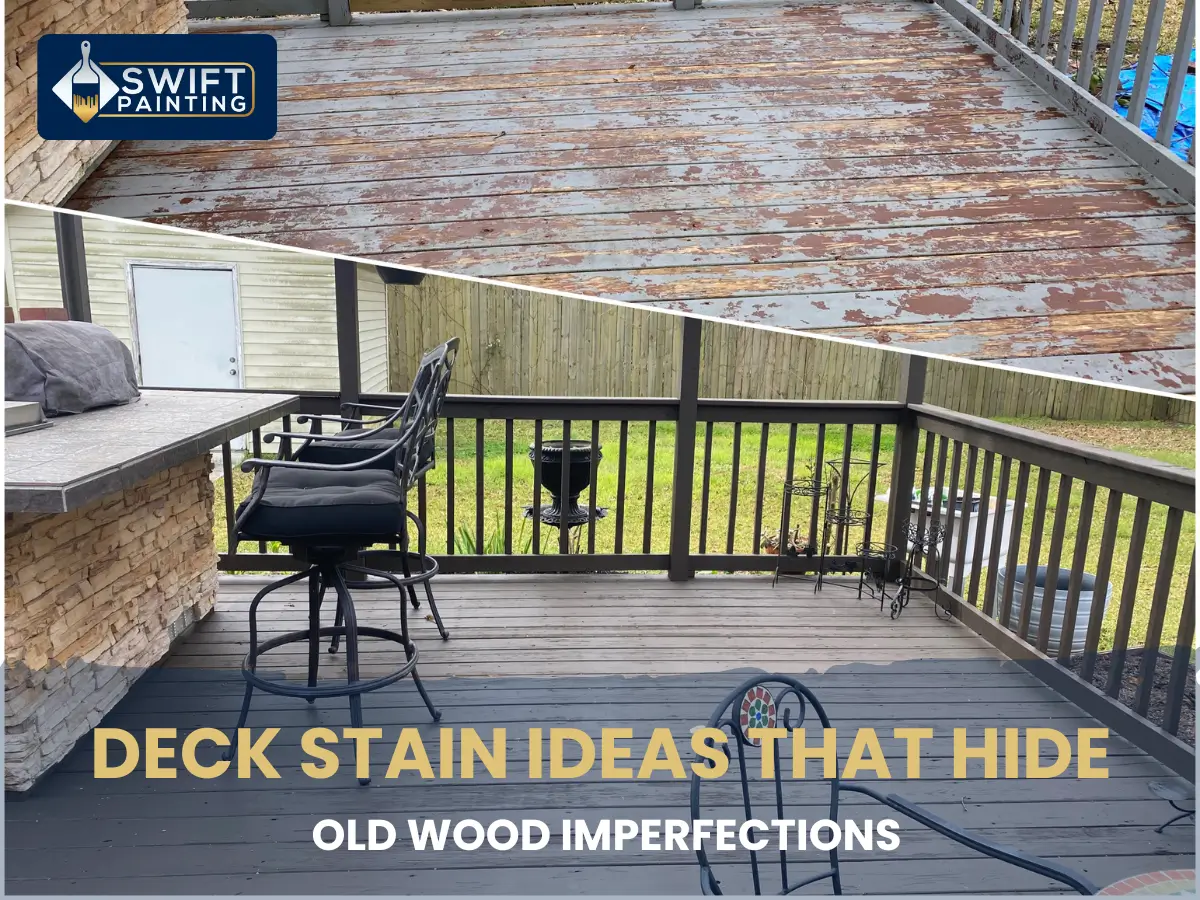
Many homeowners assume weathered boards automatically mean a full deck replacement. In reality, the right stain color and opacity can dramatically improve the appearance of aging wood without the cost of rebuilding.
The most successful deck stains focus on visual balance rather than perfection. Instead of trying to make every board look new, the goal is to create a consistent finish that minimizes distractions and highlights the overall outdoor space.
Solid stains are often chosen when homeowners want maximum color consistency, while semi-solid options allow some wood character to remain visible. Semi-transparent stains work best when the deck still has relatively uniform color and grain patterns.
When selecting a finish, think beyond the boards themselves. Consider how the stain will interact with your home's exterior color, landscaping, outdoor furniture, and nearby fencing. A coordinated design often creates a much stronger visual impact than the stain color alone.
Best Deck Stain Ideas by Home Style
One of the easiest ways to narrow down deck stain ideas is to match the finish with your home's architectural style.
Modern Homes
Clean-lined homes often pair well with driftwood gray, charcoal, slate, or weathered oak finishes. These colors complement black railings, metal accents, and contemporary landscaping.
Traditional Homes
Warm cedar, chestnut, and medium walnut stains create a timeless appearance that blends naturally with brick, siding, and classic outdoor spaces.
Farmhouse Properties
Soft weathered browns, light oak, and muted gray-brown stains help create the relaxed, welcoming look many homeowners associate with farmhouse design.
Coastal-Inspired Homes
Light driftwood tones, washed grays, and subtle whitewashed finishes complement coastal architecture while helping outdoor spaces feel bright and open.
Choosing a stain that aligns with the home's overall style often produces better long-term results than simply selecting a color sample that looks attractive on its own.
Color Options for Deck Stain That Work With Imperfection
Color does a lot of visual work. Warm, earthy tones like cedar, redwood, and chestnut naturally blend with grain variations and surface inconsistencies. They don't fight the wood's texture; they complement it.
Cooler tones, like driftwood gray or weathered silver, are especially flattering on decks surrounded by stone pavers or homes with modern or coastal exteriors. If your boards are uneven in tone, gray-based stains tend to unify the surface better than warm neutrals. When exploring deck stain, this color direction consistently ranks among the most forgiving for older wood.
Some popular color directions homeowners are choosing:
- Deep espresso or dark walnut for a rich, bold look that minimizes surface variation
- Warm honey or golden oak for a sunlit, natural feel
- Driftwood gray or slate for a clean, contemporary finish
- Redwood and cedar tones for that classic Southern charm
Creative Deck Finishes That Add Personality
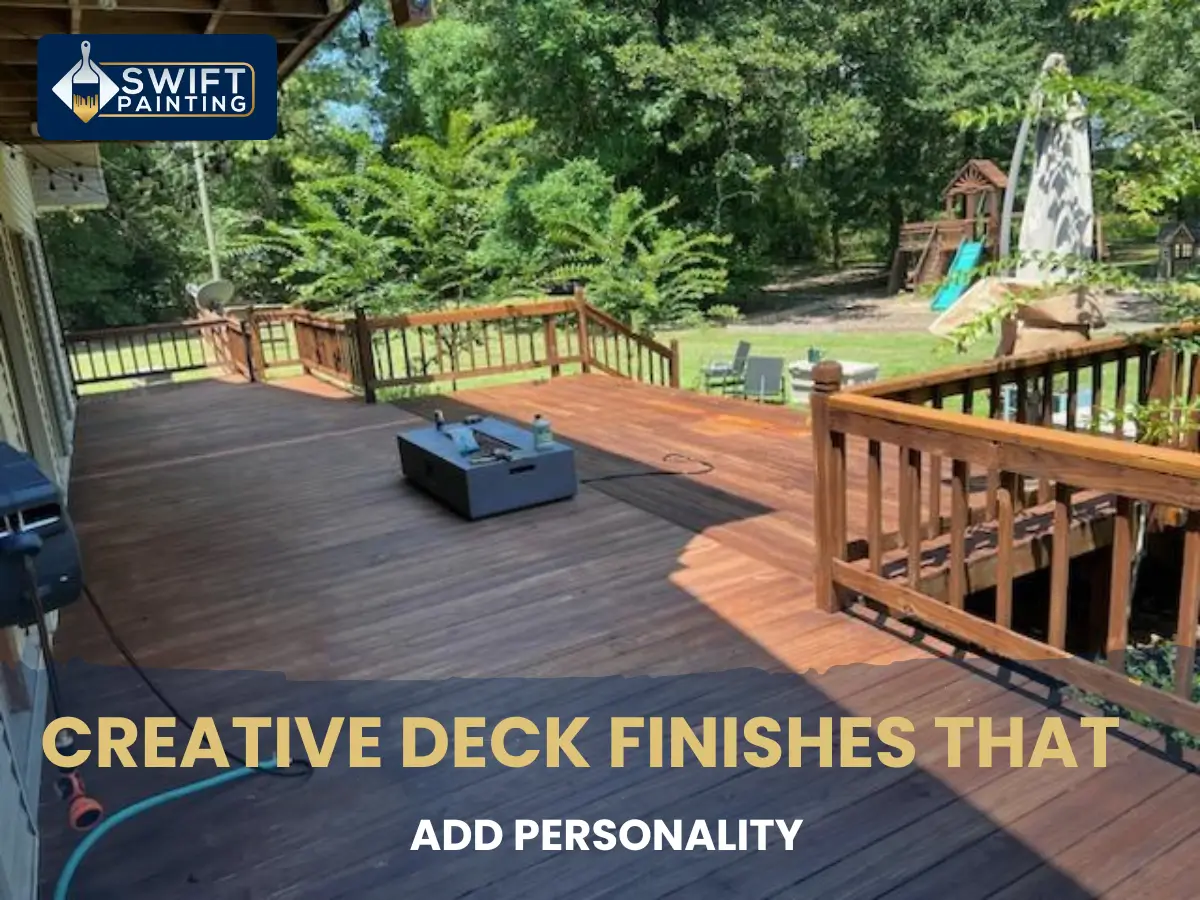
Beyond solid and semi-transparent, there are creative deck finishes worth exploring if you want something more distinctive. A two-tone deck uses one stain color on the decking boards and a contrasting shade on the railings and trim. It's a designer trick that adds visual structure without a full renovation.
Whitewashing is another underrated option. A white-tinted semi-transparent stain gives coastal or farmhouse-style homes that breezy, casual look. It softens the wood and hides minor discoloration remarkably well.
And then there's the textured solid finish, which adds a slight sheen and a grippier surface. That matters a lot in Louisiana summers when afternoon rain showers make decks slippery. Looks great, functions better.
Dark vs. Light Deck Stains: Which Looks Better?
There is no universal "best" deck stain color. The right choice depends on the condition of the wood, the surrounding landscape, and the overall design goals.
Darker stains such as espresso, dark walnut, and rich cedar tend to hide visual inconsistencies more effectively and create stronger contrast with landscaping.
Lighter stains such as honey oak, driftwood, and natural cedar often make outdoor spaces feel larger and more open while showcasing more of the wood's natural variation.
Homeowners with older decks frequently prefer medium-to-dark stain colors because they help reduce the visibility of minor imperfections without making the surface appear overly uniform.
Before choosing a color, test several stain samples on different sections of the deck and view them during different times of day. Natural sunlight can significantly affect how a stain appears once fully cured.
Blending Your Deck With the Landscape
One of the most overlooked parts of choosing among deck stain ideas is how the deck reads against the surrounding yard. Blending the deck with landscape means thinking about tree canopy colors, lawn tones, garden beds, and even the exterior paint on your house.
A deck surrounded by lush greenery tends to look best with warm brown or amber stains. The contrast is natural, almost like bark against leaves. On the other hand, if your yard has a lot of stone, gravel, or a pool, a cooler gray or slate stain keeps everything feeling cohesive.
Think of your deck as the center panel of a larger outdoor painting. The stain color is how you make that panel belong.
Accenting Your Deck With Fences for a Polished Look
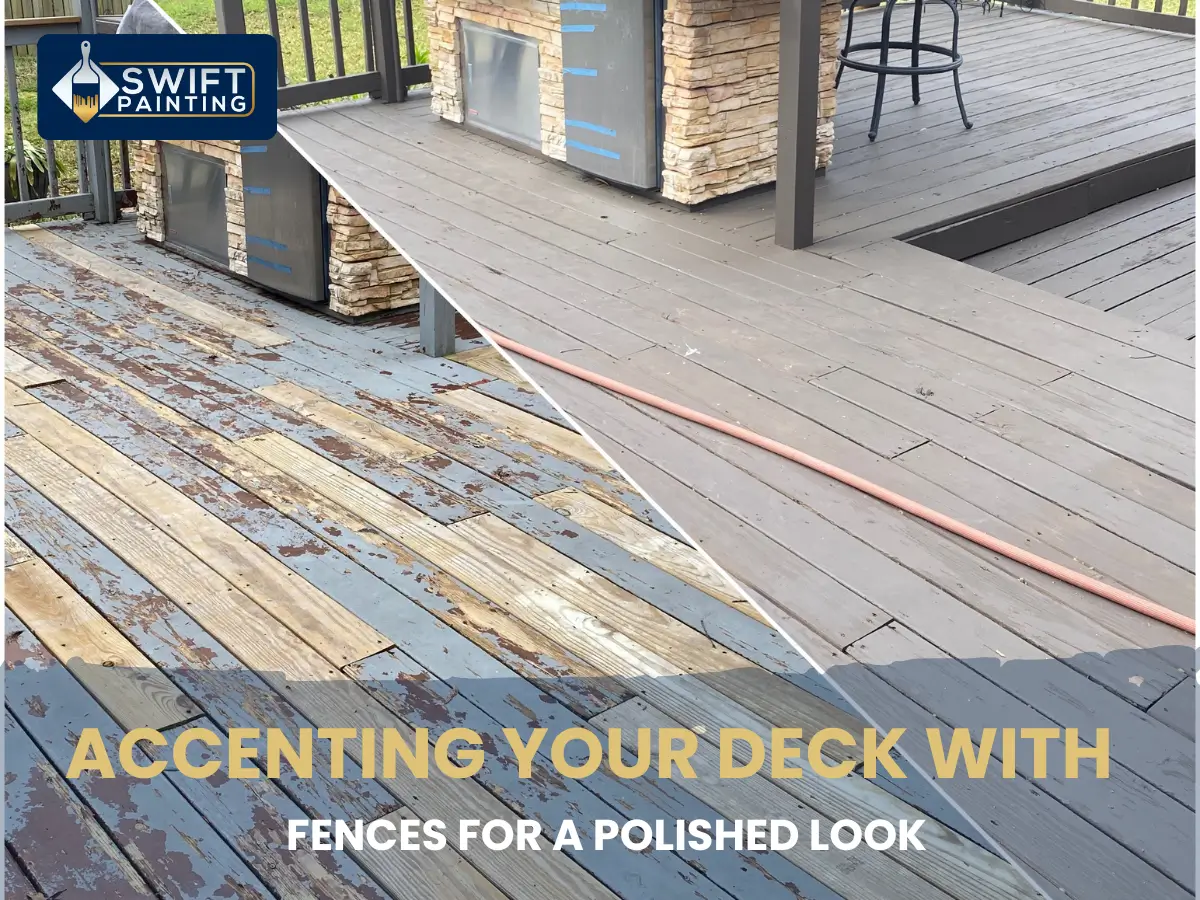
This is where a lot of homeowners stop short. They stain the deck, then leave the fence raw or painted a completely different color, and the whole yard feels disconnected.
Accenting the deck with fences actually pulls the entire outdoor area together. You don't have to match them exactly. In fact, a slight tonal variation often looks more intentional than a perfect match. If your deck is dark walnut, a medium cedar on the fence creates depth. If the deck is gray, try a slightly lighter version of the same tone on fence panels.
A few combinations that work well:
- Matching deck and fence in the same stain family, different opacity
- Using the deck color on fence post caps and rails only
- Going bold on the deck, neutral on the fence, to let each element breathe
Stain for Different Wood Types
Not all wood responds to stain the same way, and this is where a lot of deck stain ideas fall apart during execution. Pressure-treated pine needs time to dry out before it accepts stain evenly. Trying to stain it too early leads to blotchy, uneven results that no amount of extra coats will fix.
Cedar and redwood are naturally resistant to moisture, but they're also particular about what stain they absorb. Oil-based penetrating stains tend to work better on these than water-based formulas. Composite decking is a whole different conversation since most composites don't accept stain the same way real wood does.
Here's a quick reference for stain and wood compatibility:
- Pressure-treated pine: wait 3-6 months before staining, use a penetrating oil-based stain
- Cedar and redwood: oil-based semi-transparent works best to preserve the natural character
- Hardwoods like ipe or mahogany require specialty penetrating oils, not standard deck stains
- Older gray or weathered wood: a solid stain after light sanding gives the most uniform result
Why Choose Swift Painting LLC
Swift Painting LLC has been serving Baton Rouge and the surrounding areas for over seven years. They're not a pop-up operation. They're a licensed, insured contractor with a real process, upfront pricing, and a track record homeowners in Denham Springs, Prairieville, Walker, and beyond can verify.
What makes Swift different isn't just the product, it's the prep. Surface prep is everything with deck staining, and most contractors rush it. Swift doesn't. They identify the wood type, assess the existing condition, recommend the right stain system, and apply it correctly from the start. When you're investing in deck stain ideas that actually last, that level of care makes all the difference.
Their motto says it best: Love Home, Love Life. That's not just branding. It's how they show up to every job.
Conclusion
Old wood doesn't have to look old. The right deck stain ideas, applied with the right technique on the right wood type, can make a decade-old deck look like it was just built. Whether you're drawn to warm cedar tones, modern driftwood grays, or a bold two-tone finish, the approach matters just as much as the color.
Want to understand the long-term value of staining beyond appearance? Read our guide on the benefits of deck stain and how regular maintenance helps protect outdoor wood from weather-related damage.
Don't settle for a deck that embarrasses the rest of your home. Give it the attention it deserves.
Ready to transform your deck? Contact Swift Painting LLC today for a free estimate.
Important Note About Hiding Deck Imperfections
While the right deck stain color can significantly improve the appearance of weathered wood, stain is not a substitute for structural repairs. Deep rot, loose boards, severe splintering, or significant water damage should be addressed before any staining project begins.
For the best results, the deck should be properly cleaned, prepared, and evaluated before selecting a stain color or finish. Surface preparation often has a greater impact on the final appearance than the stain color itself.
At Swift Painting LLC, we help homeowners identify the most suitable stain type, finish, and color based on the condition of the wood, the age of the deck, and the overall look they want to achieve.
What is the best stain for an older or weathered deck?
Solid stains in darker tones like espresso, dark walnut, or deep cedar hide surface flaws and discoloration most effectively on both older decks and heavily weathered wood.
How long should I wait to stain new pressure-treated lumber?
Wait at least 3 to 6 months for the wood to dry out properly before applying any stain.
How often does a stained deck need to be re-stained?
Solid stains typically last 3 to 5 years, while semi-transparent stains may need refreshing every 2 to 3 years, depending on sun and foot traffic.
Can I use a semi-transparent stain on a heavily weathered deck?
It's not recommended. Heavily weathered boards need a solid or semi-solid stain to achieve an even, consistent finish.
Does deck stain color affect how hot the surface gets in summer?
Yes. Darker stains absorb more heat, so in hot Louisiana summers, medium or lighter tones can keep your deck more comfortable underfoot.
Ready to Transform Your Home?
Whether you need exterior repainting, interior transformations, or custom cabinet spray refinishing, Swift Painting LLC delivers flawless results engineered for Louisiana homes.
Contact our expert team today for your free written proposal.